How to Find a Leather Goods Manufacturer in Pakistan
Finding a leather goods manufacturer in Pakistan is not hard. There are hundreds of factories in Sialkot, Lahore and Karachi, and most of them will reply to your email within a day. Finding a reliable one is the hard part. This guide walks you through how we shortlist, test and approve factories for brands every week, so you can do the same before you pay a deposit.
It is written for small and mid-size brands: fashion labels, private label sellers, e-commerce stores and corporate gift buyers ordering jackets, bags, wallets, belts or other small leather goods.
Why source leather goods from Pakistan?
Pakistan has a full leather supply chain in one country: tanneries, cutting and stitching units, hardware suppliers and packaging. That keeps costs and lead times reasonable, and it means a factory can often get leather in the colour and finish you want without importing it.
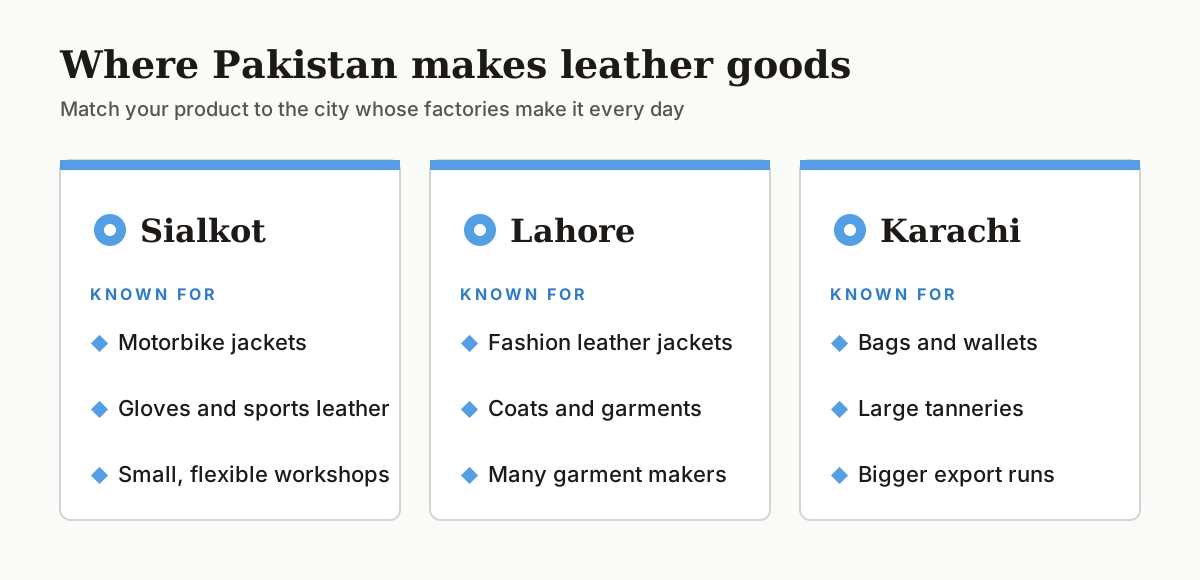
- Sialkot is known for motorbike jackets, gloves and sports leather, and for small, flexible workshops.
- Lahore has many garment makers, so it is strong for fashion leather jackets and coats.
- Karachi is home to large tanneries and export factories, good for bags, wallets and bigger runs.
The other reason is MOQ. Many Pakistani workshops will accept a first order that a large factory in China or Italy would turn down. That makes Pakistan a practical choice for a brand testing its first collection.
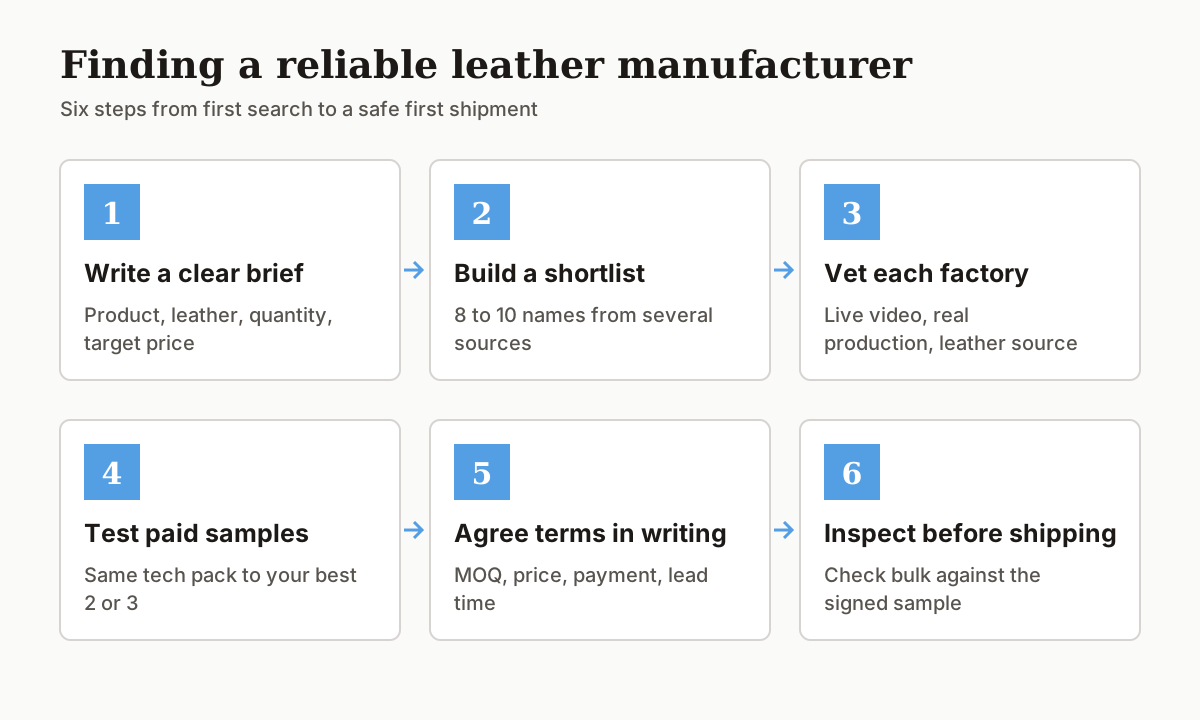
Step 1: Know exactly what you need before you search
Most bad factory matches start with a vague brief. Before you contact anyone, write down:
- The product and a reference photo or tech pack.
- Leather type, for example full grain cowhide, lambskin, or nubuck, plus thickness in mm or oz.
- Quantity per style and per colour for the first order.
- Target price per piece and the market you sell in (US, UK, EU).
- Any must-haves: LWG-rated leather, branded hardware, custom packaging, a delivery date.
A factory that is good at 2,000-piece bag orders may not want 60 jackets. A clear brief helps you find a factory whose normal work already looks like your order.
Step 2: Where to find leather goods manufacturers in Pakistan
You will get the best shortlist by using more than one source. Here is how each one compares:
| Source | Good for | Watch out for |
|---|---|---|
| B2B marketplaces (Alibaba, ExportHub, TradeKey) | Fast first list, price range | Many listings are traders, not factories |
| Trade bodies (TDAP, PLGMEA, Pakistan Tanners Association) | Registered exporters with a track record | Lists are not filtered by product or MOQ |
| LinkedIn and Instagram | Seeing real work and talking to owners | Photos may be taken from other brands |
| Trade shows and factory visits | Checking quality in person | Expensive for a small first order |
| A local sourcing partner | Vetted factories, samples and QC on the ground | Choose one who is open about their fee |
Aim for 8 to 10 names at this stage. You will cut most of them in the next step.
Step 3: How to check if a leather manufacturer is reliable
This is the step most buyers skip. A nice website and a quick reply do not tell you much. These checks do:
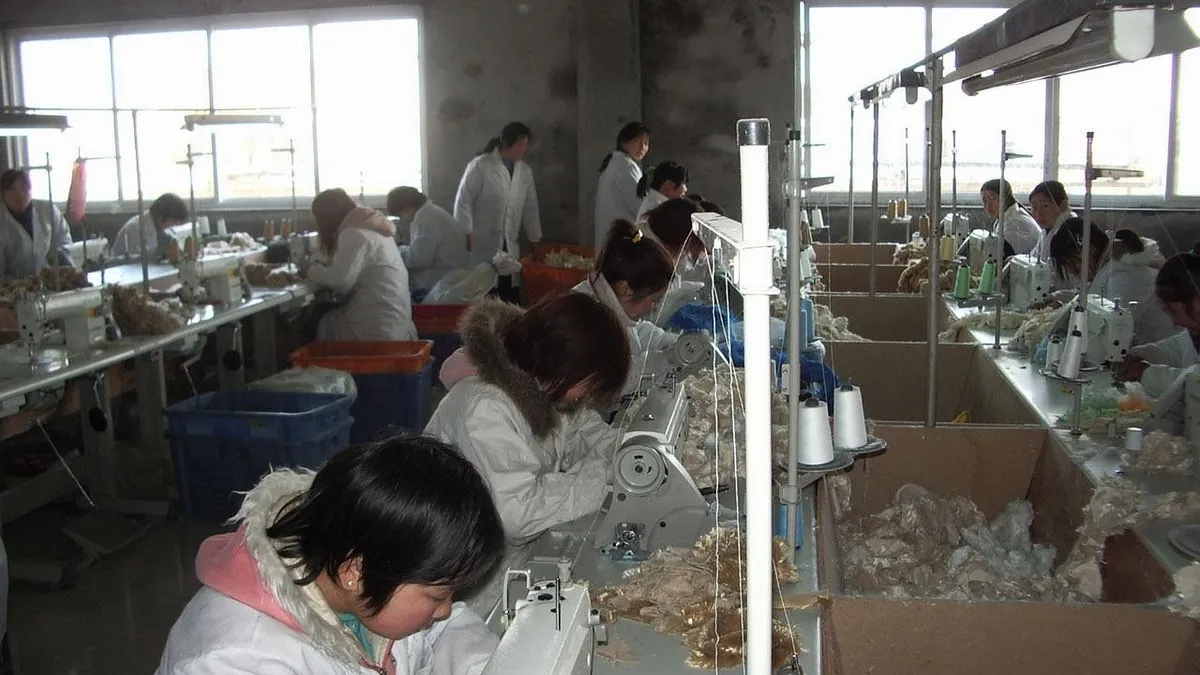
Is it a real factory or a trader?
Ask for a short live video call walking through the cutting table and stitching floor. Traders are fine to work with, but you should know who is actually making your product and who you will deal with when something goes wrong.
Do they make your product every day?
Ask for photos of current production of something close to your design, not catalogue images. A jacket factory that "can also do bags" will learn on your order.
Can they name their leather source?
A reliable maker knows which tannery the hides come from and can tell you if it is LWG rated. Read our guide to LWG certified leather if your customers ask about sustainability.
Are they registered exporters?
Ask for their company registration, export registration and a recent shipping reference. A factory that has shipped to your region before already knows the labelling and paperwork.
How do they answer hard questions?
Ask what happens if the bulk order does not match the sample. A good factory has a clear answer. A risky one says "no problem, sir" to everything.
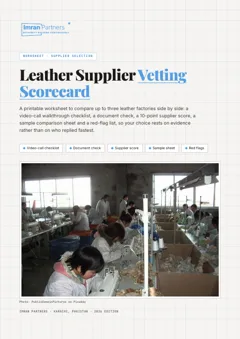
Free 7-page worksheet to compare three factories side by side: video-call checklist, document check, a 50-point supplier score, sample sheet and red flags.
⬇ Download free PDFStep 4: Order samples and test them properly
Order a paid sample from your best 2 or 3 factories, using the same tech pack. Comparing them side by side shows you more than any conversation.
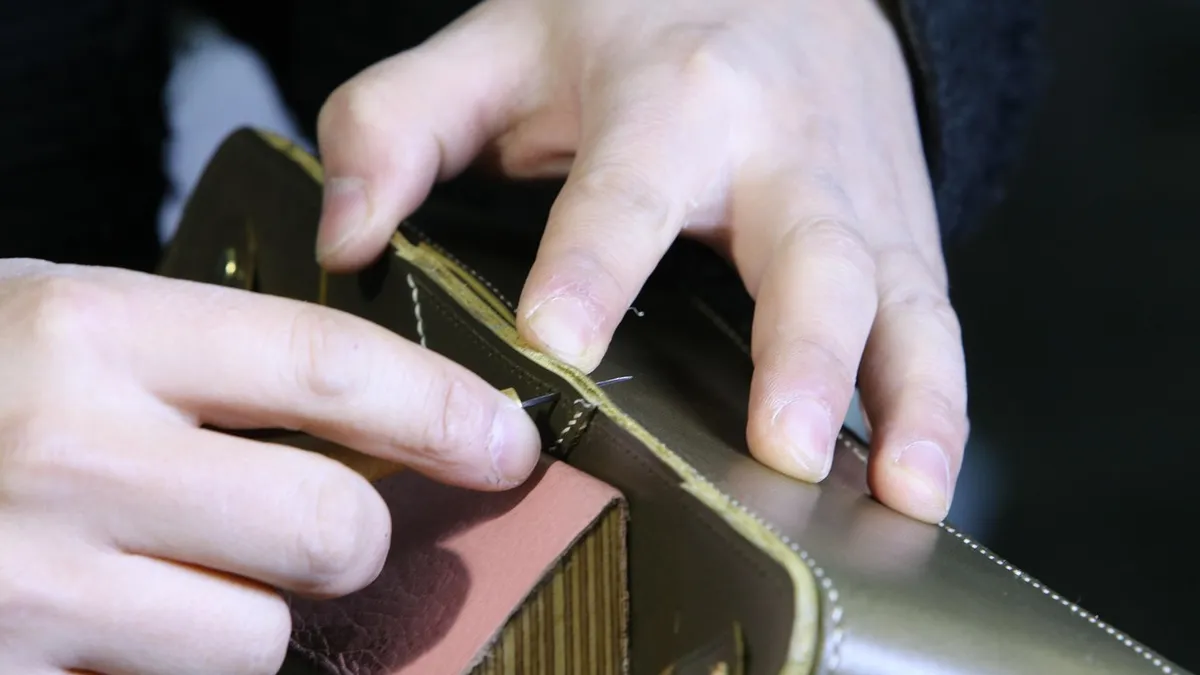
- Leather: is it the grade you asked for? Our guide on how to tell if leather is real covers the quick tests.
- Stitching: even stitch length, no loose threads, strong stress points.
- Edges: clean, painted or burnished edges with no cracking.
- Hardware: zips and buckles that feel solid and match your spec.
- Measurements: check against your size chart, not by eye.
Keep one approved sample, signed and dated, as the reference for bulk production. We also ask the factory to keep a matching leather swatch, so QC compares against something physical, not just photos.
Step 5: Agree MOQ, price, payment and lead time in writing
Before you pay, get one written order sheet that both sides sign. It should cover:
- Price per piece, and whether it includes packaging, labels and freight.
- MOQ per style and per colour.
- Payment terms. A deposit before production and the balance after inspection is common.
- Lead time for sampling and for bulk, with a shipping date.
- What happens if the goods fail inspection.
To compare offers from different countries fairly, work out the full cost to your door with our landed cost calculator.
Step 6: Inspect before the goods ship
Never pay the balance until the goods are checked. A pre-shipment inspection pulls a random sample from the finished order and checks it against your approved sample and spec. If you cannot be there yourself, a third-party inspector or a local sourcing partner can do it and send you photos and a report the same day.
Red flags when choosing a leather goods manufacturer
- Prices far below everyone else for "genuine leather".
- No live video, only edited photos.
- Asking for full payment before production.
- Free samples promised for a complex custom product.
- Vague answers about which leather and which tannery.
- Pushing you to change your design to whatever they already make.
Working with a sourcing partner instead
If you do not have time to vet factories yourself, a sourcing partner on the ground can do steps 2 to 6 for you. That is what we do at Imran Partners: we are not a manufacturer, we match brands with verified manufacturers in Pakistan we already work with, manage samples and run QC before shipping. You can see how this works for different products on our pages for leather manufacturers in Pakistan and leather jacket manufacturers.
Frequently asked questions
How do I find a reliable leather goods manufacturer in Pakistan?
Build a shortlist from several sources, check each one is a real factory that makes your product, order paid samples from the best two or three, and inspect bulk goods before paying the balance.
Which city in Pakistan is best for leather products?
It depends on the product. Sialkot is strong for motorbike jackets and gloves, Lahore for fashion jackets, and Karachi for bags, wallets and larger export orders.
What is the usual MOQ for leather products in Pakistan?
It varies by factory and product. Many workshops accept small first orders per style, especially if you choose leather the tannery already has in stock. Always confirm MOQ per style and per colour.
Should I pay for samples?
Yes. Paying for a sample gets you a factory's real effort, and many factories deduct the sample cost from your first bulk order.
How long does production take?
Sampling usually takes a few weeks, and bulk production takes longer depending on quantity and the factory's schedule. Get both dates in writing before you pay.
How can I check leather quality from abroad?
Ask for a leather swatch and a sample, run simple tests at home, and book a pre-shipment inspection for the bulk order.
Is a trader worse than a factory?
Not always. A good trader or sourcing partner can save you time and handle QC. The important thing is to know who makes the product and who is responsible if something goes wrong.
Conclusion
The right leather goods manufacturer in Pakistan is the one that already makes products like yours, is open about its leather, passes a side-by-side sample test and agrees to inspection before you pay in full. Take time on those checks and your first order is far more likely to arrive the way you approved it.
Planning a first order? Send us your design and quantities and we will tell you which verified manufacturers fit your product, MOQ and budget.

Muhammad Imran is the founder of Imran Partners, a leather sourcing partner based in Karachi, Pakistan. He works with leather goods manufacturers across Pakistan to help brands source jackets, bags, wallets, belts and gloves, from leather selection and sampling to quality checks before shipment.