
Crafting with Nubuck: A Leatherworker’s Guide to Cutting and Sewing
M
Muhammad Imran
•I hope you enjoy this post. My team and I can help showcase your expertise like this. Let's talk.
Master the art of working with sanded grain leather. From managing directional nap to perfecting edge paint, this technical guide covers the essential mechanics for successful nubuck projects.
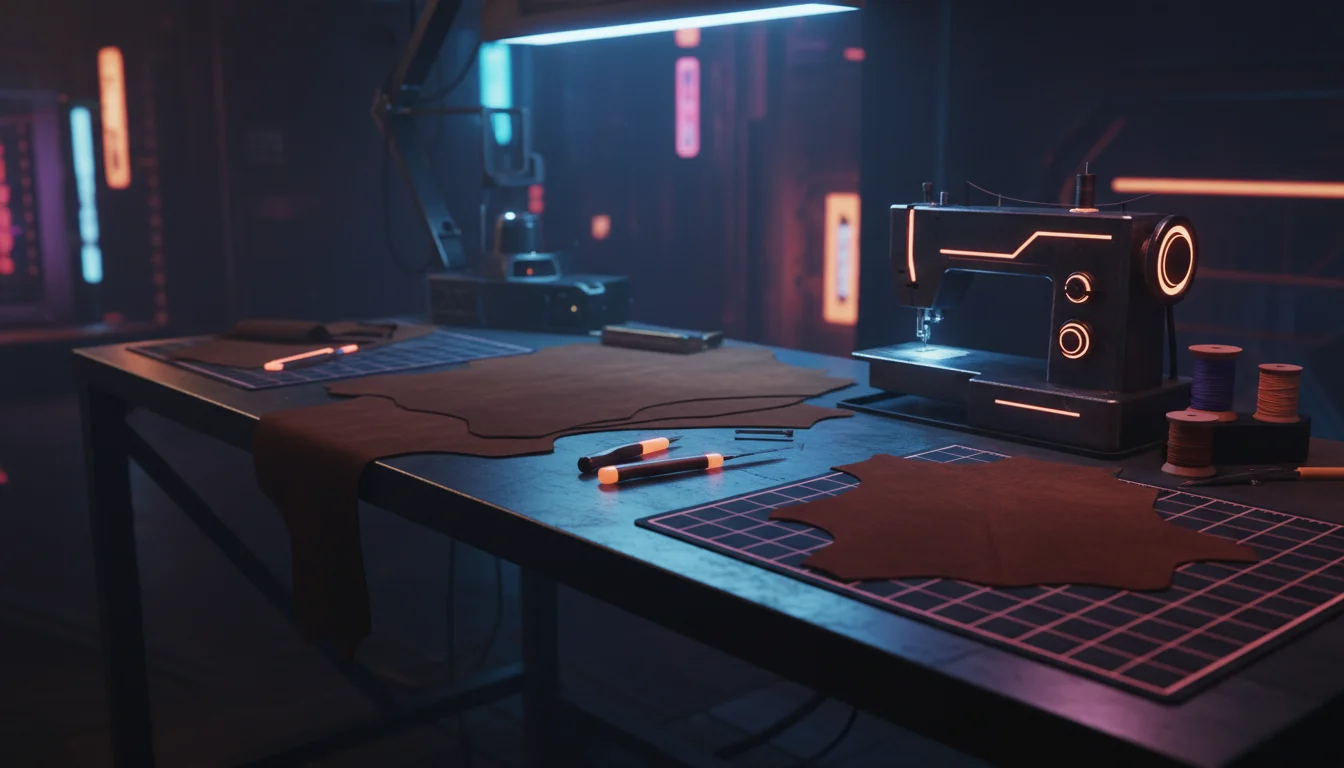
Negotiating with the Velvet Trap <p>You don’t just work with Nubuck; you negotiate with it. Unlike the rigid predictability of vegetable-tanned tooling leather or the forgiving nature of oil-tanned pull-up, Nubuck is a velvet trap. It feels luxurious, soft, fibrous, and deeply matte, but that sanded top-grain surface records every mistake, every slip of the skiving knife, and every drop of oil from your sewing machine.</p> <p>For the uninitiated, the allure is undeniable. But for the veteran leatherworker, Nubuck represents a shift in mechanics. Friction changes. The way the blade drags through the fiber changes. Even the way light hits the finished bag changes based on how you laid out your pattern. Ground yourself in the fundamental properties by reading <a href="https://imranpartners.com/posts/the-ultimate-master-guide-to-nubuck-leather-characteristics-care-and-comparisons">our comprehensive master guide on Nubuck leather characteristics</a>.</p> The Discipline of Nap Direction <p>The first cut happens in your mind before the knife ever touches the table. Your primary adversary here is directional nap. Nubuck has a 'pet.' Run your hand down the hide; it goes light. Run it up; it goes dark. If you cut the front panel of a bag with the nap running down, and the side gussets with the nap running up, your project will look mismatched when the light hits it. Mark the grain direction on the verso (flesh side) with a silver pen or chalk.</p> <p>Consistency is king. Generally, you want the nap to run down as gravity falls. This allows liquids to roll off easier and presents a richer color. Furthermore, you must assess the temper. Nubuck is top-grain leather that retains tensile strength, but the process softens the hand. To understand how this differs structurally from its split-leather cousin, review <a href="https://imranpartners.com/posts/nubuck-vs-suede-the-definitive-comparison-guide">the structural differences between Nubuck and Suede</a>.</p> Mastering the Spongy Grain <p>Cutting Nubuck requires a different tactile approach than cutting Veg-Tan. Nubuck can be spongy and wants to move under the blade. Put away the rotary cutter unless you are doing long, straight strap cuts on a heavy-weight hide. For precision curves and tight corners, a clicking knife or a heavy-duty utility knife with a fresh blade is non-negotiable. The sanded surface creates high friction that 'grabs' the side of the blade.</p> <p>Polish the sides of your blade, not just the edge. A mirror-polished blade face reduces friction against the velvet nap, allowing the knife to glide rather than stutter. Stuttering leads to jagged edges that are difficult to sand smooth. Stabilize the leather closer to the cutting line than usual. Use a heavy weight or your spread fingertips to press the leather firmly into the mat. Do not pull the leather towards the knife; let the knife do the work.</p> Thinning the Edge without Tearing <p>Skiving relies on the leather offering resistance. Nubuck, being softer, tends to bunch up under a dull knife rather than slicing cleanly. You need a Japanese skiving knife or a wide French edger stropped to a scary sharpness. If the blade is even slightly dull, it will catch the fibers of the nap and tear a chunk out of the grain side, ruining the piece instantly.</p> <p>Lower your angle of attack; a shallow angle parallel to the stone slices better. Skive on a glass plate or polished granite slab to allow the blade to glide. If the Nubuck is too soft, apply masking tape to the grain side before skiving the flesh side to stabilize it. Understanding <a href="https://imranpartners.com/posts/the-tanning-process-how-nubuck-is-made-from-top-grain">how the tanning process creates this texture</a> helps you realize that below that velvet surface is a dense grain structure.</p> Banishing the Presser Foot Tracks <p>Sewing Nubuck presents a unique problem: Marring. The feed dogs and presser foot of an industrial walking-foot sewing machine are designed to grip, and on Nubuck, that grip leaves permanent tracks in the nap. Dial back the foot pressure; you want just enough to feed the material, not crush it. Swap out serrated feed dogs for smooth bottom leather feet. Test on scrap; if you see tracks, loosen the spring.</p> <p>Nubuck is softer than Veg-Tan, so high tension will pucker the leather. Use a slightly lower tension to avoid strangling the leather. If hand stitching, do not use a scratch awl to mark your stitch line directly on the nap, as it won't buff out. Use a wing divider with light pressure or mark over masking tape. Run waxed thread through canvas to strip excess wax, as wax globs on Nubuck are difficult to remove. Read about the <a href="https://imranpartners.com/posts/5-common-mistakes-that-ruin-nubuck-leather">5 common mistakes that ruin Nubuck leather</a>.</p> The Inevitability of Edge Paint <p>In 90% of cases, you cannot burnish Nubuck effectively. Most Nubuck is chrome-tanned or re-tanned, and these fibers don't fuse together with friction; they just fray and mushroom. Even with veg-tanned Nubuck, the sanding process has already disrupted the grain structure, making a glass-slick edge difficult to achieve. Edge paint is the professional standard, encapsulating the fuzzy fibers for a sealed rim.</p> <p>Start by sanding the edge flat with a block and 400 grit. Use a heating tip smooth the fibers down and melt synthetic compounds for a better base. Apply a clear base coat or primer to seal the thirsty fibers. Apply edge paint, let it dry, and sand with progressively higher grits (600, 800) until you have a smooth, plastic-like dome. This prevents dirt and moisture from wicking into the center of your panels.</p> The Clean Room Methodology <p>Nubuck is a magnet for oil, dust, and metal filings. Microscopic metal dust on your bench can stain a yellow Nubuck panel face down, and you can't just wipe it off. Workshop cleanliness is non-negotiable. Cover your workbench with clean kraft paper before starting. Wash your hands thoroughly or wear nitrile gloves. If you are gluing, be paranoid; contact cement that touches the nap is permanent.</p> <p>While some damage is permanent, surface scuffs can sometimes be buffed out. If a tool slides across the surface, don't panic immediately. Consult our guide on <a href="https://imranpartners.com/posts/fixing-scratches-and-scuffs-on-nubuck-boots">fixing scratches and scuffs</a>, which applies just as well to raw crafting panels as it does to finished boots. Respecting the nap and keeping your blades stropped will ensure the Nubuck rewards your effort.</p> The Reward of Patience <p>Crafting with Nubuck is an exercise in patience and cleanliness. It demands sharp tools, a light touch, and a strategic approach to edge finishing. But the result is a product with a depth of color and a tactile warmth that full-grain leather simply cannot match. When you nail the tension and paint the edges to perfection, the piece feels alive.</p> <p>The technical difficulty of working with this material is what makes the final product so valuable. By following these protocols, you elevate your work from hobbyist to professional grade. Respect the velvet, master the knife, and your nubuck projects will stand out as true examples of leatherworking excellence. My team and I can help showcase your expertise like this. <a href="https://calendar.app.google/ekGLMMe8ds4pqgoa6" target="_blank" rel="noopener noreferrer">Let's talk</a>.</p>