
Is Nubuck Good for Hiking Boots? A Craftsman's Durability Analysis
M
Muhammad Imran
•I hope you enjoy this post. My team and I can help showcase your expertise like this. Let's talk.
Nubuck feels like velvet but wears like iron. Is it good for hiking boots? This craftsman's analysis dissects its performance against the brutality of the trail, from abrasion resistance to breathability.
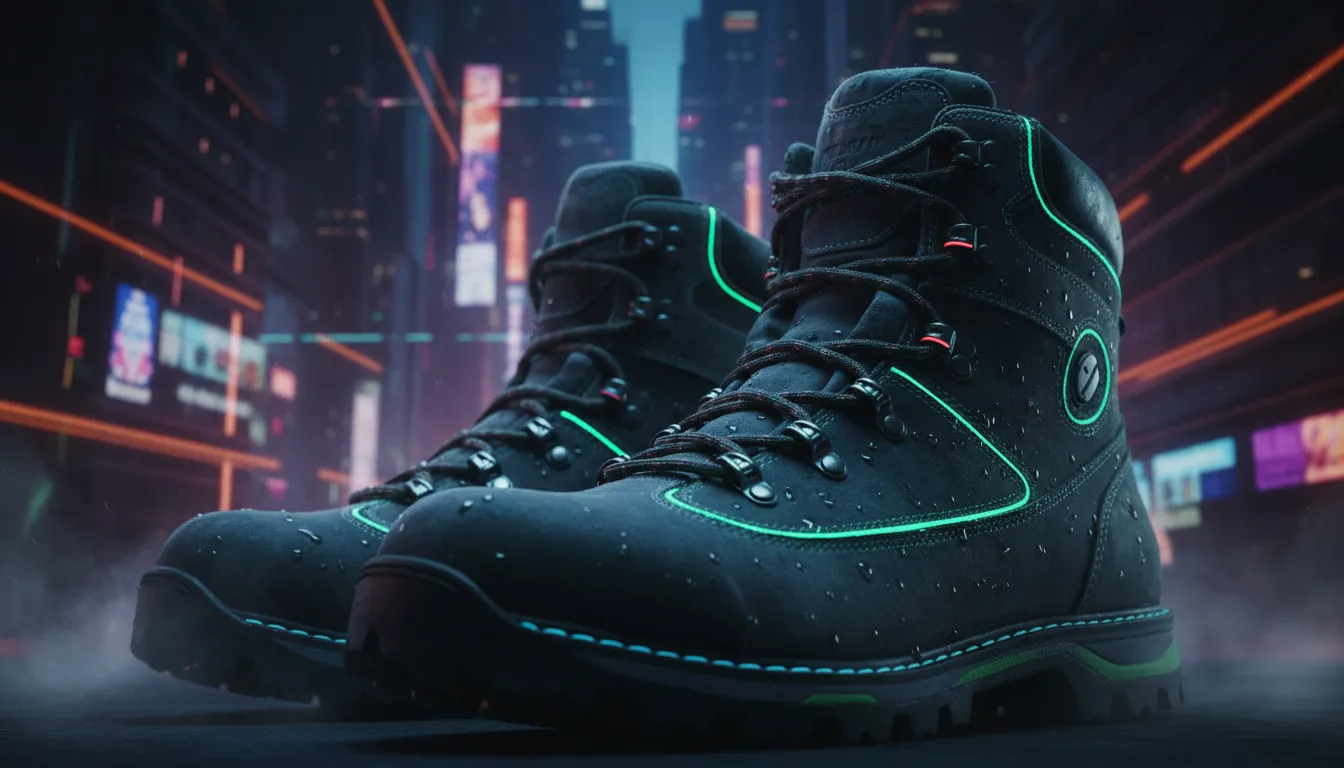
Is Nubuck Good for Hiking Boots? A Craftsman's Durability Analysis <p>There is a specific sound a well-made boot makes when it strikes granite. It’s a dull thud, not a hollow click. It speaks of density, of fiber structure, and of material integrity. In the world of <strong>hiking footwear</strong>, the debate between synthetic meshes and traditional leathers is endless. But sitting squarely in the middle—often misunderstood and frequently underestimated—is Nubuck.</p><p>Is Nubuck good for hiking boots? The short answer is yes, but with a significant asterisk regarding care. The long answer requires us to look under the microscope at the corium, the grain, and the sanding belts that create this unique material.</p> <p>As a material, Nubuck is a paradox. It feels like velvet but wears like iron. It is top-grain cattle leather that has been sanded or buffed on the grain side, or outside, to give a slight nap of short protein fibers, producing a velvet-like surface. This isn't the split-leather suede found on cheap fashion sneakers; this is the hide’s fortress. To understand why it dominates the mid-to-heavyweight hiking category, we must dissect its performance against the brutality of the trail.</p><p>If you are unfamiliar with the fundamental differences in leather types, I strongly suggest you start by reading <a href="/posts/the-ultimate-master-guide-to-nubuck-leather-characteristics-care-and-comparisons">our comprehensive master guide to Nubuck leather characteristics and comparisons</a> before diving into this trail-specific analysis.</p> Abrasion Resistance on the Trail <p>When you are scrambling over scree or navigating a narrow path choked with manzanita, your boots are under constant assault. <strong>Trail debris</strong> does not discriminate. It seeks weak points.</p><p>Here is the technical reality: Nubuck is created from <strong>top-grain leather</strong>. This is the outer layer of the hide, where the fibers are tightest and most dense. Unlike suede, which is derived from the fibrous underside (the split), Nubuck retains the full thickness of the skin's strongest layer. The sanding process used to create the nap removes only a few microns of the surface.</p><p>Why does this matter for abrasion? Because that "nap”—those millions of tiny raised fibers—acts as a microscopic buffer. When a rock scrapes against smooth, full-grain leather, it immediately gouges the surface, creating a permanent scar that can compromise water resistance. When a rock scrapes Nubuck, the fibers move. They compress. The scuff is often superficial.</p> <p>However, it is not invincible. While it boasts superior <strong>scuff resistance</strong> compared to synthetics, deep gouges can occur. The difference lies in longevity. A synthetic mesh tears; Nubuck merely scratches. For a deeper dive into how this material stacks up against the heavyweight champion of boots, read our analysis on <a href="/posts/nubuck-vs-full-grain-leather-which-is-better-for-boots">Nubuck vs. Full Grain Leather for boot construction</a>.</p><p>In my experience on the workbench, I have seen Nubuck boots come in after 500 miles on the Appalachian Trail. The toes are battered, yes. The color has shifted. But the structural integrity of the upper remains unbroken. The leather hasn't thinned; it has merely character-hardened.</p> Flexibility vs. Support <p>The "cast iron" feel of traditional mountaineering boots is a relic of the past for most hikers. Modern trekkers demand a blend of rigid <strong>ankle support</strong> and immediate flexibility. This is the sweet spot where Nubuck thrives.</p><p>Because the top grain has been sanded, the surface tension of the leather is slightly broken. This doesn't weaken the hide structurally, but it does allow for a more forgiving flex. A brand new pair of 3mm thick full-grain leather boots might take weeks of painful blistering to break in. A similar gauge Nubuck boot offers a significantly reduced break-in period.</p> <p>The collagen fibers in Nubuck are still tightly interlinked, providing the vertical stiffness required to prevent rolled ankles on uneven terrain. However, the horizontal flexibility allows the metatarsals to splay naturally during a hill climb. It molds to the foot faster.</p><p>This molding process is crucial. Synthetic boots do not mold; they merely soften or break down. Leather remembers the shape of your foot. But be warned: sizing is critical. Because of its suppleness, hikers often wonder if the fit will change over time. To understand what to expect regarding volume changes, consult our guide on <a href="/posts/does-nubuck-stretch-sizing-and-break-in-guide">sizing and breaking in Nubuck footwear</a>.</p> Waterproofing Performance in the Wild <p>Here is where the controversy usually lies. Is Nubuck waterproof? Inherently, no. It is a sponge made of protein. The sanding process opens up the pore structure, making untreated Nubuck highly susceptible to water absorption. If you step in a stream with raw Nubuck, it will darken instantly and soak through.</p><p>However, no high-end hiking boot is sold as "raw."</p><p>Manufacturers impregnate Nubuck with oils and waxes during the tanning process (often called "oil-nubuck"). furthermore, almost all serious Nubuck hikers are lined with a waterproof membrane, such as a <strong>Gore-Tex lining</strong>. The leather serves as the armor; the membrane serves as the shield.</p> <p>The synergy is vital. The Nubuck provides the structural wall that protects the delicate Gore-Tex membrane from thorns and sharp rocks. But for the system to work, the leather itself must not "wet out." If the outer leather becomes saturated, breathability stops, and the boot becomes heavy and cold. This is known as "wet-out."</p><p>To prevent this, you must maintain the Durable Water Repellent (DWR) finish. Unlike smooth leather which can be waxed into a seal, Nubuck requires specific sprays that coat the fibers without flattening the nap. It is a delicate balance. You want the water to bead up, but you don't want to clog the pores with heavy grease. For the correct methodology, refer to our technical breakdown on <a href="/posts/can-you-waterproof-nubuck-best-sprays-and-techniques">waterproofing sprays and techniques for Nubuck</a>.</p><p>Real-world application: I have worn Hanwag Nubuck boots in Scottish bogs. With proper treatment, the water beads off. Without treatment, the boots become lead weights. It is not the material’s fault; it is the user’s maintenance discipline. If you plan on trekking in severe weather, you need to be prepared. Check our <a href="/posts/nubuck-in-rain-and-snow-survival-guide">survival guide for Nubuck in rain and snow</a>.</p> Breathability for Long Treks <p>Breathability is the silent killer of hiking comfort. Blisters are caused by friction and moisture. If your sweat cannot escape, your socks get wet, your skin softens (maceration), and blisters form. </p><p>Nubuck possesses a distinct advantage over full-grain smooth leather here. The sanding process that creates the velvet texture effectively uncaps the grain surface. This increases the air permeability of the hide. While a thick layer of wax on smooth leather seals moisture <em>out</em>, it also seals moisture <em>in</em>. Nubuck, treated with a lighter spray, retains a higher degree of vapor transmission.</p> <p>However, we must address <strong>membrane compatibility</strong>. If you buy a Nubuck boot lined with Gore-Tex, the breathability is limited by the membrane, not the leather. The leather is almost always more breathable than the plastic liner. The benefit of Nubuck in this stack is that it holds less heat than a solid plastic or thick rubber rand.</p><p>On hot, dry trails, an unlined Nubuck boot is superior to almost anything else. It breathes. It wicks. It moves. But these are rare in the modern market, mostly found in traditional desert boots or jungle boots. For the average backpacker, the Nubuck + Gore-Tex combo offers a "good enough" breathability rating that outperforms heavy full-grain options, provided you keep the pores clean from dust and mud.</p> Weight Comparison: Nubuck vs. Synthetic <p><strong>Backpacking gear</strong> has been obsessed with the "ultralight" movement for a decade. In this arena, synthetic materials (nylon, polyester, KPU overlays) usually win on the scale. A synthetic boot might weigh 400-500g per boot. A comparable Nubuck boot might weigh 600-750g.</p><p>Why accept the penalty of <strong>boot weight</strong>?</p><p>Dampening. Mass absorbs energy. When you are pounding downhill with a 40lb pack, a featherlight boot transfers every pebble, every shock, and every vibration directly into your skeletal system. The density of Nubuck leather acts as a natural shock absorber for the upper foot. It creates a stable chassis.</p> <p>Furthermore, synthetic boots often rely on layers of glue and stitching to provide structure. Nubuck boots can be made with fewer pieces—sometimes a "one-piece upper"—which reduces failure points. A heavier boot that doesn't fail 20 miles from the trailhead is worth its weight in gold. </p><p>The weight of Nubuck is the weight of assurance. It is lighter than the heavy 3mm Swiss Gallusser leather used in forestry boots, but substantial enough to deflect a rattlesnake strike or a jagged piece of slate.</p> Maintenance on Multi-Day Hikes <p>Here is where the "experienced craftsman" perspective is vital. Synthetics are wash-and-wear. Nubuck is a relationship. If you ignore it, it will dry out, crack, and fail.</p><p>On a multi-day hike, <strong>leather durability</strong> depends on your nightly routine. You cannot simply kick them off and leave them by the fire. Heat is the enemy. It shrinks the collagen fibers, causing the leather to curl and pull away from the sole (delamination). </p><p><strong>Field Maintenance Steps:</strong></p><ol> <li><strong>Dry Brush:</strong> At the end of the day, use a stiff brush to remove dried mud. Mud acts as a desiccant; it sucks the natural oils out of the leather.</li> <li><strong>Cold Dry:</strong> Remove the insoles. Place the boots in a cool, dry spot. Never direct heat.</li> <li><strong>Condition (Post-Hike):</strong> Once home, you must replenish the oils. But be careful—standard shoe grease will ruin the nap, turning your Nubuck into a greasy, smooth mess.</li></ol> <p>Scratches are inevitable. They are the badges of honor. Most light scuffs on Nubuck can be erased simply by rubbing them with a rubber crepe brush or a specialized eraser. The friction heats the fibers and redistributes the color. For deeper damage, or to understand how to keep your boots looking trail-ready, read our guide on <a href="/posts/fixing-scratches-and-scuffs-on-nubuck-boots">fixing scratches and scuffs on Nubuck boots</a>.</p><p>If you encounter heavy staining—grease from a camp stove or sap from a pine tree—do not use harsh detergents. You need specific techniques to lift the stain without destroying the leather's feel. We have a specific protocol for <a href="/posts/removing-oil-and-grease-stains-from-nubuck-emergency-guide">removing oil and grease stains from Nubuck</a>.</p> Top Rated Nubuck Hiking Boots <p>To contextualize this analysis, we must look at the market leaders who utilize this material. These aren't paid endorsements, but observations of construction quality.</p><h3>Lowa Renegade GTX Mid</h3><p>Perhaps the most ubiquitous Nubuck boot on the trail. It uses a relatively thin, supple Nubuck upper combined with a polyurethane Monowrap frame. It prioritizes comfort and zero break-in time over absolute bombproof durability. The Nubuck here is soft, hydrophobic, and flexible.</p> <h3>Meindl Borneo / Bhutan</h3><p>These represent the "Old World" approach. They use thicker Nubuck, often waxed. They employ a memory foam system (MFS) that works in tandem with the molding properties of the leather. These are heavy-duty trekkers where the Nubuck is the primary structural component, not just a cosmetic skin.</p><h3>Hanwag Tatra</h3><p>Known for exceptional craftsmanship, Hanwag uses high-grade Nubuck with minimal stitching. The fewer the stitches, the fewer the leaks. Their "Terracare" leather is tanned with eco-friendly standards, proving that Nubuck can be both rugged and sustainable.</p> The Verdict on Nubuck for Hiking <p>Is Nubuck good for hiking boots? It is arguably the best all-around material for the modern backpacker. It bridges the gap between the disposable nature of synthetics and the punishing rigidity of old-school full-grain leather.</p> <p>It offers high <strong>abrasion resistance</strong>, excellent <strong>ankle support</strong>, and, when paired with modern membranes and DWR sprays, superb weather protection. It demands more from you than plastic boots do. It asks for cleaning. It asks for conditioning. It asks for respect. In return, it gives you a custom fit that no machine can replicate and a durability that measures trails in years, not miles.</p><p>If you are ready to invest in your feet, choose Nubuck. Just make sure you own a good brush.</p>