
Nubuck vs. Full Grain Leather: Which is Better for Boots?
M
Muhammad Imran
•I hope you enjoy this post. My team and I can help showcase your expertise like this. Let's talk.
A grumpy old cobbler's no-nonsense guide to understanding the real difference between nubuck and full grain leather for your boots. Cut through the marketing fluff and learn which one is right for you.
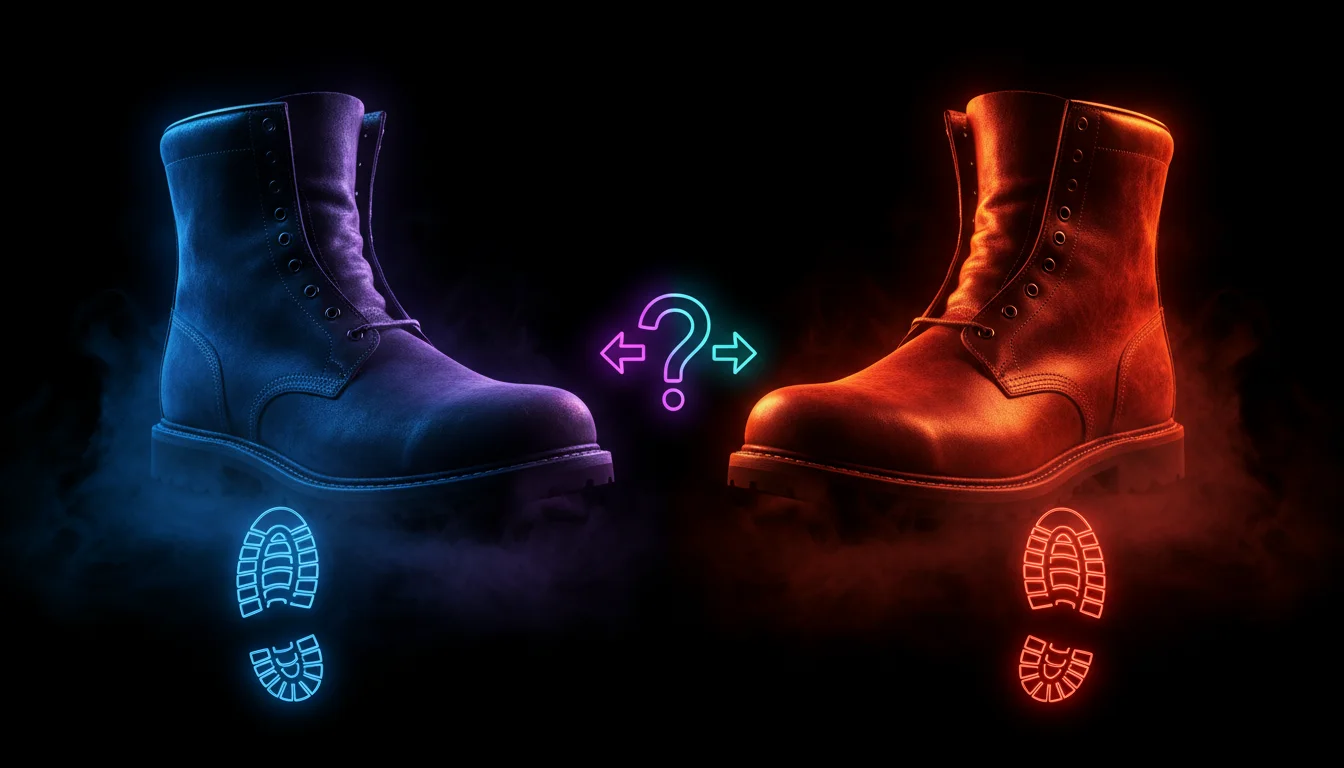
Stop Wasting Money on the Wrong Boots <p>Look, I’ve spent more years than I care to count breathing in the chemical fumes of tanneries and arguing with production managers who think "genuine leather" is a feature and not a legal disclaimer for "garbage." I’ve seen hides processed from raw skin to finished boot more times than I’ve had hot dinners.</p><p>So when I see people arguing in forums about <a href="https://imranpartners.com/posts/nubuck-vs-full-grain-leather-which-is-better-for-boots">Nubuck vs. Full Grain Leather: Which is Better for Boots?</a>, it usually makes me want to throw my phone into a vat of chromium.</p> <p>The marketing departments—don’t get me started on them—love to confuse you. They slap fancy adjectives on boxes to justify a $300 price tag on boots that won’t last through a wet Tuesday. But here’s the thing: both nubuck and full grain are top-tier materials. They are the real deal. However, they are distinct beasts intended for very different lives.</p><p>If you buy nubuck thinking you’re going to wade through a swamp and wipe it clean with a rag, you’re an idiot. If you buy full grain expecting it to feel like velvet right out of the box, you’re delusional.</p> Defining Full Grain Leather: The Gold Standard <p>Let’s start with the king. Full grain leather is exactly what it sounds like. It is the full, <strong>unaltered grain</strong> of the hide.</p><p>When a cow (or buffalo, or whatever poor creature gave up the ghost) is skinned, the hide has layers. The very top layer, where the hair used to be, is the strongest part. It has the tightest fiber structure. It’s designed by nature to keep the animal’s insides in and the weather out.</p><p>Full grain leather takes that hide, removes the hair, creates the leather, and... leaves it alone. That’s it. They don’t sand it. They don’t buff it. They don’t try to make it look pretty by removing the imperfections.</p> <p>Because they leave the surface intact, you get maximum durability. The fibers are vertical and tightly packed. This creates a natural moisture barrier. It’s not waterproof—leather is skin, skin has pores, pores let water in eventually—but it’s naturally resistant.</p><p>Here is the catch that drives customers crazy, though: <strong>natural markings</strong>.</p><p>Since the cow actually lived a life, it likely bumped into barbed wire, got bitten by horseflies, or rubbed against a fence post. Full grain leather shows these <strong>leather scars</strong>. To a specialist like me, that’s character. It proves the leather is high quality because the manufacturer didn’t try to sand off the history of the animal.</p><p>Full grain is <strong>rugged footwear</strong> incarnate. It’s thick, it’s stiff, and it requires you to earn the right to wear it comfortably. But once you do, it’s bulletproof. I have a pair of full grain boots from 2012 that look better today than the day I bought them. They have molded to my feet in a way that synthetic materials simply can’t.</p> Nubuck Characteristics: Aesthetics vs. Function <p>Now, let’s talk about nubuck. People constantly confuse this with suede. If I had a dollar for every time someone called nubuck "suede," I could retire to a private island and stop writing these articles.</p><p>Here is the difference, and pay attention because this matters. Suede is made from the <em>underside</em> of the hide—the flesh split. It’s fibrous, loose, and soft. It’s essentially the byproduct of the leather industry.</p><p>Nubuck, on the other hand, is top grain leather. It starts its life just like full grain. It is the outer side of the hide. But, the tannery takes that strong outer layer and attacks it with sandpaper.</p> <p>They use an abrasive process to create a <strong>buffed grain</strong>. By lightly sanding the surface, they break open those tight fiber bundles I talked about earlier. This creates a nap—a velvety, soft texture that feels incredible to the touch. It looks matte. It looks premium. It screams "quiet luxury."</p><p>But there is a trade-off. By sanding the surface, you are essentially opening the door. You’ve taken the skin’s natural defense mechanism (that smooth, tight outer layer) and roughed it up.</p><p>This makes nubuck generally more breathable than full grain because the surface isn’t as sealed. But it also makes it a magnet for dirt, oil, and water. If you drop a greasy slice of pizza on full grain, you wipe it off. If you drop it on nubuck, congratulations, you now have a pizza-patterned boot forever.</p><p>(Actually, you can fix it, but it’s a pain—read my guide on <a href="https://imranpartners.com/posts/removing-oil-and-grease-stains-from-nubuck-emergency-guide">Removing Oil and Grease Stains from Nubuck: Emergency Guide</a> if you’ve already messed up).</p><p>Does this mean nubuck is weak? No. The <strong>leather thickness</strong> is usually the same as full grain. The structural integrity is there. It’s just the surface finish that changes the game. Timberland made a fortune selling yellow nubuck boots as construction gear. They are tough, but they stain if you look at them wrong.</p> Scratches and Patina Development <p>This is where the emotional relationship with your boots comes in. How do you want them to age?</p><p>Full grain leather doesn't just age; it evolves. We call this "patina." As you wear the boots, the leather absorbs oils from your environment, sunlight darkens it, and scuffs polish out or blend in. A scratch on full grain leather isn’t damage; it’s a story. You apply some conditioner, maybe some colored wax, and that scratch becomes part of the boot’s deep, rich color profile.</p><p>I’ve seen full grain boots that looked boringly brown on the shelf turn into a deep mahogany with almost black accents after five years of abuse. It’s beautiful.</p> <p>Nubuck handles trauma differently. Because it has a nap, you can’t really "polish" it in the traditional sense. If you scratch nubuck, you are permanently altering the nap direction or removing fibers.</p><p>Small scuffs on nubuck can often be brushed out with a stiff nylon or brass brush. You’re essentially re-fluffing the nap to hide the mark. But deep scratches? They are there to stay.</p><p>And then there is the "shiny spot" problem. Over time, high-friction areas on nubuck boots (like the toe or the inner ankle) will get pressed down flat. The nap wears away, and the leather becomes smooth and shiny. Once nubuck goes shiny, you can’t really get the velvet back. It just looks like worn-out leather.</p> Maintenance Requirements Compared <p>I’m lazy. I’ll admit it. When I get home from a site visit or a hike, the last thing I want to do is perform surgery on my footwear.</p><p>Full grain is the lazy man’s best friend. You can abuse it. Mud? Let it dry and brush it off. Dryness? Slap some mink oil or leather grease on it. Scuffs? colored shoe cream.</p><p>You can coat full grain in heavy wax for waterproofing. It darkens the leather, sure, but it creates a <strong>protective coating</strong> that makes water bead up and roll off. It’s simple. It’s distinct. You know when it needs care because it looks dry.</p> <p>Nubuck is high maintenance. It’s the sports car of leathers. You need a special brush (crepe or brass). You need a special eraser block for stains. You need a dedicated spray for waterproofing because you can’t rub wax into the nap without ruining the texture.</p><p>If you put standard shoe polish on nubuck, you will ruin it instantly. The wax will mat down the fibers, and you’ll end up with a sticky, ugly mess that looks like neither nubuck nor full grain.</p><p>You have to be proactive with nubuck. You need to spray it with a hydrophobic protectant <em>before</em> you go out. You need to brush it regularly to keep dirt from embedding deep in the fibers. If you hate rituals, avoid nubuck.</p><p>For a deeper dive into the nuances of these materials (and why people confuse them with cheaper stuff), check out <a href="https://imranpartners.com/posts/nubuck-vs-suede-the-definitive-comparison-guide">Nubuck vs. Suede: The Definitive Comparison Guide</a>. It clarifies just how much stronger nubuck is compared to the cheap suede junk, even if it is high maintenance.</p> Breathability and Comfort for Hiking <p>This is where the argument gets heated among the outdoor crowd.</p><p>Full grain leather is a wall. It blocks wind, it blocks water, and consequently, it blocks a fair amount of air. In the summer, a heavy full grain boot can turn your foot into a swamp. Manufacturers try to mitigate this with Gore-Tex liners and mesh tongues, but the leather itself is dense.</p><p>Nubuck has an advantage here. Because the grain has been buffed (sanded), the surface area is increased, and the pores are slightly more open. It offers better <strong>moisture wicking</strong> capability naturally. The leather breathes a bit better.</p> <p>However, we need to talk about the <strong>boot break-in period</strong>.</p><p>Full grain leather is notoriously stiff. It is the "iron boot." The first two weeks of wearing a proper pair of full grain <strong>hiking boots material</strong> can be pure misery. Blisters, pinch points, the feeling that you are walking in concrete blocks. You have to fight the boot until it surrenders and molds to your foot.</p><p>Nubuck is generally softer right out of the box. The sanding process weakens the tension of the top grain slightly, making it more pliable. You still have a break-in period, but it’s usually days, not weeks.</p><p>If I’m going for a casual day hike in dry, hot weather? I might lean toward nubuck for the breathability and immediate comfort.</p><p>But if I’m going off-trail, through briar patches, kicking rocks, and dealing with unpredictable weather? Full grain every single time. I don’t care if my feet get a little hot; I care that a sharp rock doesn't slice through the side of my boot. Full grain deflects sharp objects better than the velvety surface of nubuck, which tends to snag.</p> Price Point Analysis <p>Here is the irony of the leather industry: Nubuck often costs more to produce than standard full grain, yet it’s perceived as less durable.</p><p>Why does it cost more? Processing.</p><p>To make full grain, you take the hide, tan it, dye it, and finish it.</p><p>To make nubuck, you take that same high-quality hide, but then you have to run it through specialized buffing machines. You have to carefully control the sanding to ensure the nap is even. If you sand too deep, you ruin the tensile strength. If you don't sand enough, it looks patchy.</p> <p>Also, selection plays a huge role. For full grain, you need a relatively clean hide, but you can hide small imperfections with darker dyes or heavy oils. For nubuck, because the surface is sanded and matte, every single deep scar or vein mark shows up vividly. You can't hide defects under a layer of polish.</p><p>So, tanneries have to select very high-quality skins for nubuck. This drives the price up.</p><p>However, in the retail market, you’ll often see full grain priced higher. This is purely branding. "Full Grain" has become a buzzword for quality, so brands charge a premium for it.</p><p>Warning: If you see "Genuine Leather" or "Bonded Leather" boots for $50, run away. That is basically leather dust glued together. Between nubuck and full grain, the price difference is usually negligible compared to the brand markup. You’re paying for the construction (Goodyear welt, Vibram sole) more than the difference in the leather type itself.</p> Ruggedness or Style?
<p>I’m not going to tell you one is universally better. That’s a lie. It depends entirely on what you do with your day.</p>
<h4>Choose Full Grain Leather If:</h4>
<ul>
<li>You work in them. Construction, farming, forestry. You need a material that can take a beating, get covered in concrete or manure, and wash off with a hose.</li>
<li>You hate maintenance. You want to wax them twice a year and forget about them.</li>
<li>You want longevity. You want a pair of boots that will last 10+ years and look better in the final year than the first.</li>
<li>You deal with water. You need the best natural water resistance available.</li>
</ul>
<h4>Choose Nubuck Leather If:</h4>
<ul>
<li>You prioritize comfort immediately. You don’t have the patience for a painful break-in period.</li>
<li>You want a specific look. You like that matte, velvety, rugged-but-refined aesthetic that pairs well with jeans and isn't shiny.</li>
<li>You are an urban hiker. You walk on pavement or groomed trails where mud and briars aren't a major threat.</li>
<li>Breathability matters. You have hot feet and need that extra bit of air exchange.</li>
</ul>
<p>Personally? I own both. But my "apocalypse boots"—the ones I’d grab if I had to run out the door and never come back—are full grain. They are ugly, they are scarred, and they are heavy. But I know exactly what they can handle.</p>