Best Welding Gloves: How to Choose for TIG, MIG and Stick
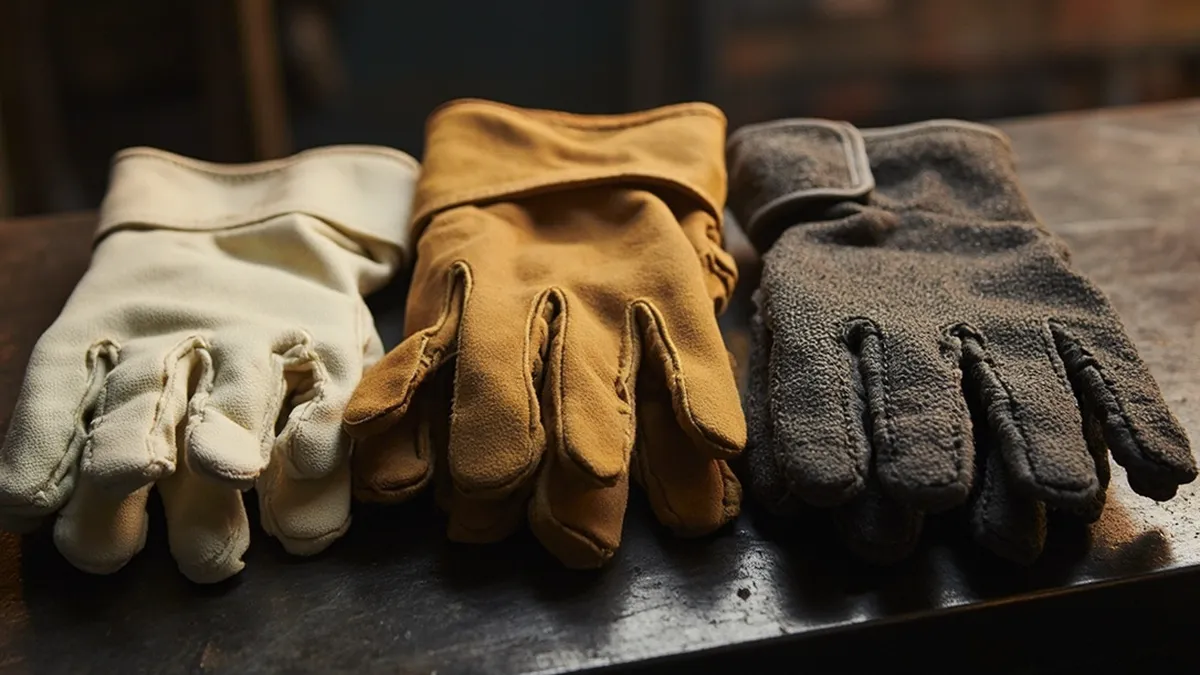
The best welding gloves are not one model. They are the pair that matches your welding process: thin, soft goatskin for TIG, a balanced lined cowhide or goatskin glove for MIG, and thick split leather gauntlets for stick. Pick the wrong type and you either burn your hands or lose the feel you need for a clean weld.
This guide explains what to look for in each type, which leather works best, the features that make a glove last, and the ratings to ask for. We source welding gloves from verified manufacturers in Pakistan for distributors and private label brands, so the last part is written for buyers who order in bulk. We do not rank brand names here; we have not lab-tested other brands' gloves, so we stick to what makes any welding glove good or bad.
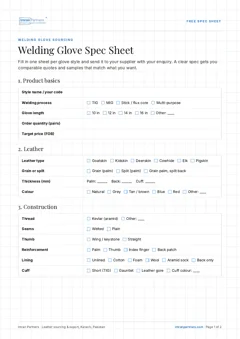
Free 2-page spec sheet: pick the process, leather, cuff, lining and features, then send it to your supplier with your order.
⬇ Download free PDFQuick answer: the best welding gloves for each process
| TIG | MIG | Stick (arc) | |
|---|---|---|---|
| Heat and spatter | Low heat, no spatter | Medium to high heat, some spatter | Highest heat, sparks and slag |
| Main need | Feel and control | Balance of protection and grip | Maximum protection |
| Best leather | Goatskin, kidskin, deerskin | Grain cowhide, goatskin, deerskin, elk | Split cowhide, elk |
| Thickness | Thin | Medium | Thick |
| Lining | Unlined | Unlined or light lining | Full cotton, foam or wool lining |
| Cuff | Short, 4 to 6 inches | Gauntlet | Long gauntlet, often 14 inch glove |
| EN 12477 type | Type B (high dexterity) | Type A or B | Type A (high protection) |
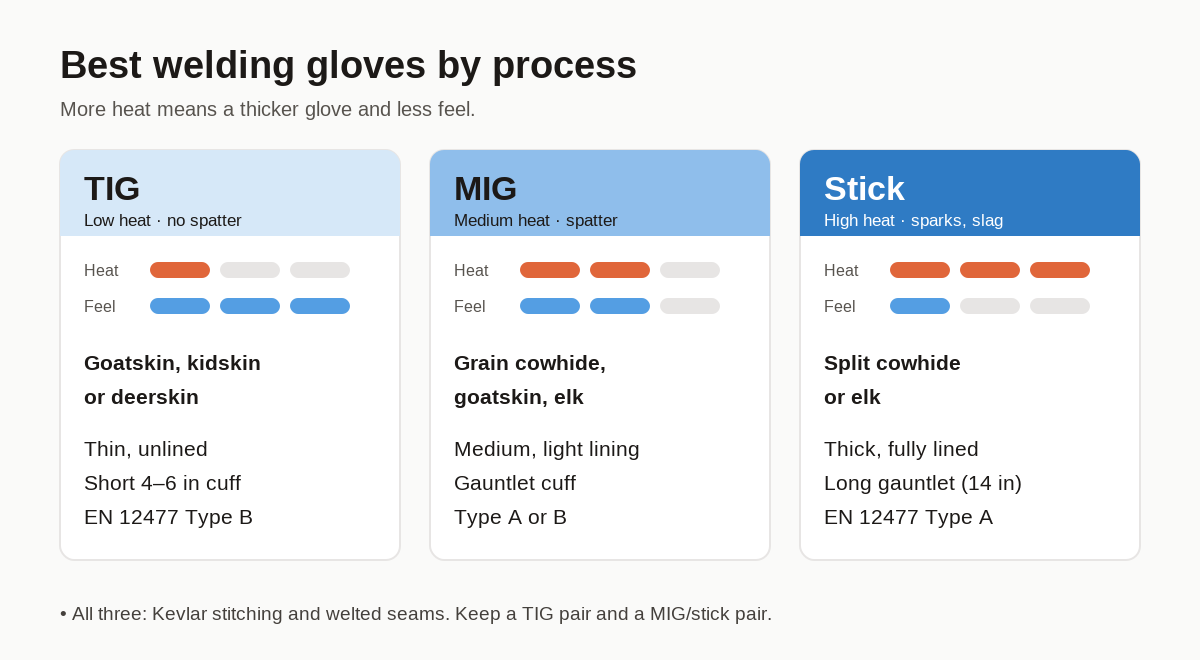
TIG vs MIG vs stick: why the glove changes
Each process puts different demands on your hands.
- TIG welding runs cooler and makes almost no spatter, but you hold the torch in one hand and feed filler rod with the other. You need fingertip feel, so the glove must be thin and close-fitting.
- MIG welding makes more heat and some spatter, and you work a trigger gun. The glove needs real heat protection but should still let you grip and move.
- Stick welding (and flux core) throws the most sparks, slag and radiant heat, often at high amperage or overhead. Feel matters less; protection matters most.
That is why thin TIG gloves burn through quickly on a stick job, and why thick stick gauntlets make TIG work clumsy.
Best TIG welding gloves: what to look for
For TIG, look for a thin, soft grain leather such as goatskin, kidskin (young goat) or deerskin. These leathers are strong for their thickness and give the feel you need for torch angle and rod feeding.
- Unlined: a lining adds bulk and kills feel.
- Snug fit: extra material at the fingertips makes rod feeding harder.
- Short to medium cuff: 4 to 6 inches, worn with a welding jacket or sleeves.
- Kevlar stitching: thin gloves need strong thread so seams do not open.
- Optional heat shield: a small extra patch on the back or a separate heat shield helps when you rest your hand on hot work.
Thin TIG gloves wear out faster than heavy gloves. Budget for more pairs per welder.
Best MIG welding gloves: what to look for
MIG gloves sit in the middle. Grain cowhide is the common choice because it is tough and still flexible; goatskin, deerskin and elk are also used.
- Medium thickness: enough to stop spatter, thin enough to work the trigger.
- Back patch or reinforced back: spatter lands on the back of the hand most.
- Light lining in the back of the hand: insulation where heat builds up, while the palm stays unlined for grip.
- Gauntlet cuff: covers the wrist and overlaps the jacket sleeve.
- Welted seams: a strip of leather in the seam keeps sparks from burning the thread.
Best stick welding gloves: what to look for
For stick welding, choose thick split leather, usually split cowhide or elk. Split leather is the inner layer of the hide; it has a suede look, takes heat well and costs less than grain leather.
- Full lining: cotton, foam or wool (a full sock lining is warmest).
- Long gauntlet: a 14 inch glove is common, so the cuff covers the forearm.
- Reinforced palm and thumb: extra leather where you grip hot rod and workpieces.
- Kevlar stitching and welted seams: essential at high heat.
- Room to pull off quickly: a loose gauntlet lets you shake the glove off if spatter gets inside.
Which leather is best for welding gloves?
| Leather | Strengths | Weak points | Best for |
|---|---|---|---|
| Goatskin / kidskin | Thin, soft, strong for its weight, natural lanolin keeps it supple | Less heat protection | TIG, light MIG |
| Deerskin | Very soft, moulds to the hand, stays soft after heat | Stretches, less abrasion resistance, costs more | TIG, MIG |
| Grain cowhide | Tough, durable, good value | Stiffer than goat or deer | MIG |
| Split cowhide | Thick, heat resistant, low cost | Bulky, wears faster than grain | Stick, MIG at high amps |
| Elk | Very heat resistant and still soft | Expensive, bulky | Stick, heavy MIG |
| Pigskin | Cheap, breathable | Lower heat and abrasion resistance | Light or occasional use |
Grain (the outer layer of the hide) gives feel and some water and oil resistance; split (the inner layer) gives heat resistance at a lower price. For more on goat leather itself, see our guide to goatskin leather.
In the welding glove ranges we source from Pakistan, the pattern is clear: thin goatskin for TIG styles, and natural cow split leather for stick welding gauntlets, often with an extra layer on the palm and thumb. MIG styles sit in between, in goatskin or cow grain and split.
Features that make a welding glove last
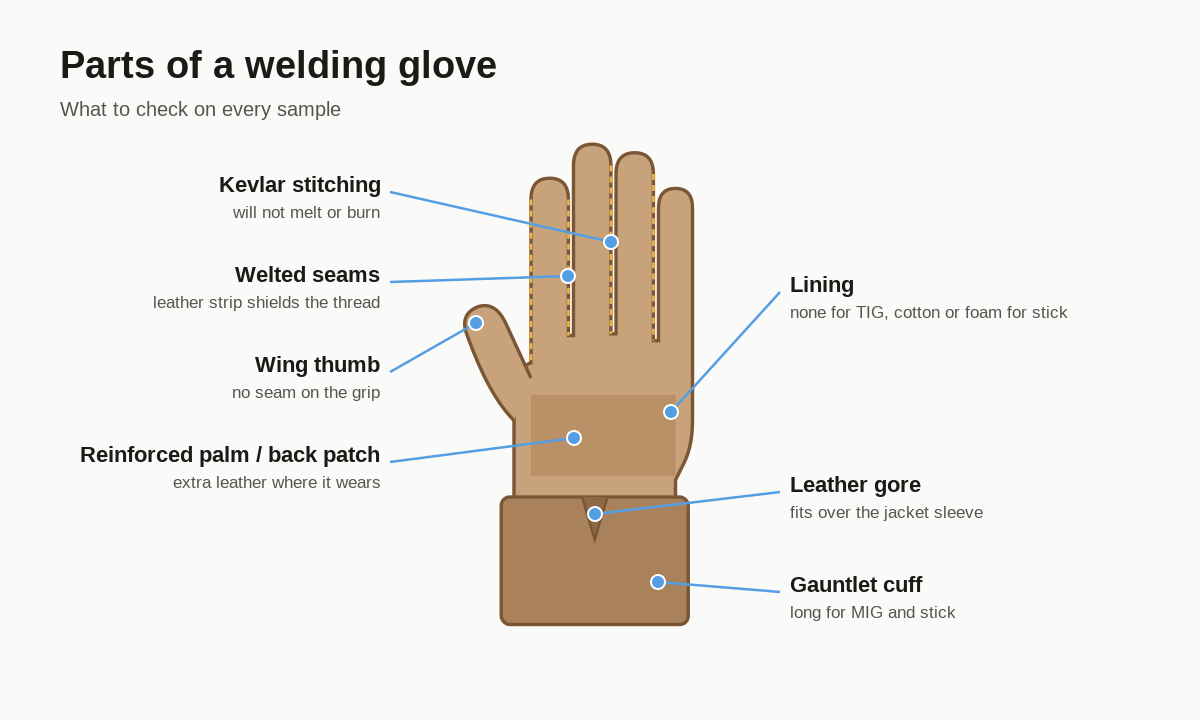
- Kevlar (aramid) thread: does not melt or burn like cotton or polyester thread. Ask for it by name.
- Welted seams: a thin leather strip sewn into the seam shields the thread from sparks.
- Reinforced palm, thumb and index finger: where gloves wear through first.
- Wing or keystone thumb: a thumb cut that moves more naturally and puts no seam on the grip area.
- Leather gore in the cuff: a V-shaped insert so the cuff fits over a jacket sleeve.
- Lining choice: none for TIG, cotton or foam for MIG and stick, aramid sock for very high heat.
- Aluminised back: reflects radiant heat for very hot or overhead work.
Welding gloves for special jobs
Women's and small welding gloves
Many welders cannot find a glove that fits. A glove that is too big loses grip, catches on work and lets sparks in at the cuff. Women's welding gloves are cut with narrower palms and shorter fingers, not just a smaller size label. If you sell to schools, training centres or mixed crews, ask the factory for a true small and extra small pattern, not only S to XL.
Overhead and pipe welding
Overhead work drops spatter straight onto the back of the hand and into the cuff. Choose a lined gauntlet with a reinforced or aluminised back, and wear it with welding sleeves or a jacket so there is no gap at the wrist.
Cold weather welding
Outdoor welders in winter need warmth without losing heat protection. A thicker foam or wool lining in a split leather gauntlet works for stick and MIG; for TIG, a thin glove with a separate liner is easier to control.
Grinding and fabrication
Between welds, gloves are used for grinding, handling plate and cleaning slag. A reinforced palm and thumb make a big difference here, because abrasion, not heat, wears these areas out first.
Can one pair of gloves do TIG, MIG and stick?
Mostly no. Many MIG and stick gloves overlap, so a heavy MIG glove can handle some stick work and the reverse. But TIG is different: a glove thick enough for stick is too clumsy for TIG, and a TIG glove is too thin for stick. Most welders and most workshops keep two pairs: one TIG glove and one MIG/stick glove. If you supply a workshop or sell to welders, stock both.
Welding glove ratings: EN 12477, EN 407 and EN 388
In Europe and many export markets, welding gloves are tested to EN 12477, the standard for protective gloves for welders. It has two types:
- Type A: higher protection, lower dexterity. Typical for MIG, stick and other high-heat work.
- Type B: higher dexterity, lower protection. Typical for TIG.
EN 12477 draws on EN 407 (heat: flame, contact heat, convective heat, radiant heat and molten metal splashes) and EN 388 (abrasion, cut, tear and puncture). In the USA, buyers often ask for ANSI/ISEA 105 levels too. Our guide to EN 388 glove ratings explains how to read the mechanical code and how to check a supplier's test report. As with any rating, ask for the report for the exact glove you are buying.
When to replace welding gloves, and how to care for them
Replace a pair when the leather turns hard and shiny, cracks, shrinks, or has holes or burned seams. Gloves that are wet, oily or greasy also need to go or be cleaned: oil soaks into leather and can catch fire, and damp leather passes heat and steam to the skin.
- Brush off spatter and dust after work.
- Let gloves dry at room temperature, never on a heater or hot work.
- Do not machine wash; leather shrinks and hardens.
- Keep TIG gloves clean; dirty gloves can contaminate tungsten and filler rod.
Buying welding gloves in bulk: a checklist for brands and distributors
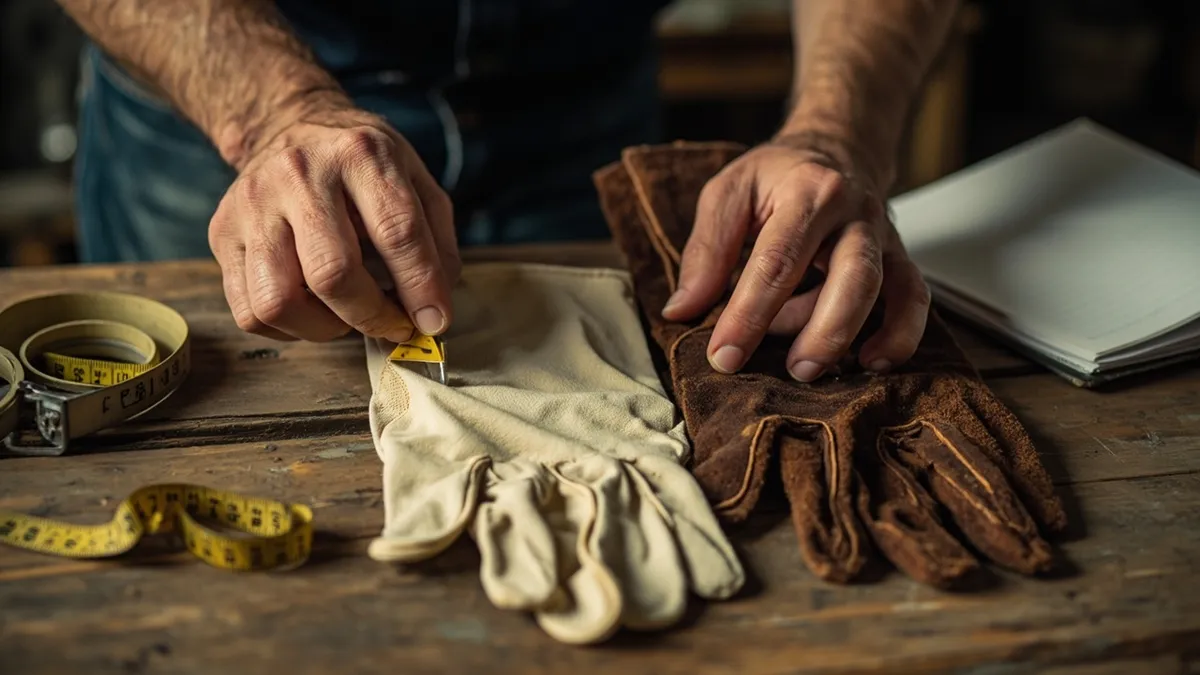
- Write a spec, not a style name. Leather type and thickness, grain or split, lining, cuff length, thread and reinforcements. Our free spec sheet above gives you the fields.
- Order samples of each type. Check stitching density, welted seams, the thumb cut and how the cuff fits over a jacket.
- Plan a size run. Welders return gloves that do not fit. Agree the size split (for example S to XL or 2XL) before production.
- Ask for test reports if your market needs them. EN 12477, EN 407, EN 388 or ANSI, for the exact model.
- Agree branding and packing. Logo print or label, pair packing, header cards and carton marks.
- Inspect before shipping. Check a sample of the bulk against the approved sample.
When buyers order welding gloves from us for the first time, we suggest sampling one TIG style and one MIG/stick style together. It shows the difference in leather and feel straight away and makes the size run easier to plan.
Pakistan, and Sialkot in particular, is one of the main sources of leather work and welding gloves. Our Pakistan leather glove exports guide shows where those gloves are sold.
Frequently asked questions
What are the best welding gloves?
The best welding gloves are the ones made for your process: thin goatskin or deerskin for TIG, grain cowhide or goatskin for MIG, and thick lined split cowhide or elk gauntlets for stick welding.
What is the difference between TIG and MIG welding gloves?
TIG gloves are thin, soft and unlined for fingertip control. MIG gloves are thicker, often partly lined and have a gauntlet cuff, because MIG makes more heat and spatter.
Can I use MIG gloves for TIG welding?
You can, but you lose feel, so filler rod and torch control are harder. Most welders keep a separate thin pair for TIG.
Can I use TIG gloves for stick welding?
No. TIG gloves are too thin for the heat and spatter of stick welding and will burn through or let heat reach your hands.
What leather is best for welding gloves?
Goatskin and deerskin for TIG, grain cowhide for MIG, and split cowhide or elk for stick. Split leather resists heat well; grain leather gives more feel and durability.
How long should welding gloves be?
TIG gloves usually have a 4 to 6 inch cuff. MIG and stick gloves have gauntlet cuffs; a 14 inch glove is common for stick, so the cuff overlaps the jacket sleeve.
How long do welding gloves last?
From a few weeks to a few months, depending on the process, the heat and the leather. Thin TIG gloves wear fastest; replace any pair that is hard, cracked or burned through.
Conclusion
Choose welding gloves by process first, then by leather, then by features: thin goatskin for TIG, balanced cowhide for MIG, and thick lined split leather for stick, all with Kevlar thread and strong seams. If you sell welding gloves or need them under your own brand, see our leather welding gloves range, add a leather welding jacket for full protection, compare every glove type on our wholesale work gloves page, or request a quote.
Cover image and photos in this guide are AI-generated illustrations.

Muhammad Imran is the founder of Imran Partners, a leather sourcing partner based in Karachi, Pakistan. He works with leather goods manufacturers across Pakistan to help brands source jackets, bags, wallets, belts and gloves, from leather selection and sampling to quality checks before shipment.
Muhammad Imran on LinkedIn