What to Look for in Leather Jacket Quality: 12 Checks
Knowing what to look for in leather jacket quality saves you from paying a premium for a jacket that cracks, peels or falls apart at the seams in two winters. Most quality guides stop at "feel the leather and check the stitching". This one goes further. We check leather jackets for brands before they ship from factories in Pakistan, so the 12 points below are the same checks a factory quality inspector makes, written so a buyer can do them in a shop, at home or from photos.
The checklist works for men's and women's jackets, biker, bomber or blazer styles, and for brands approving a first sample.
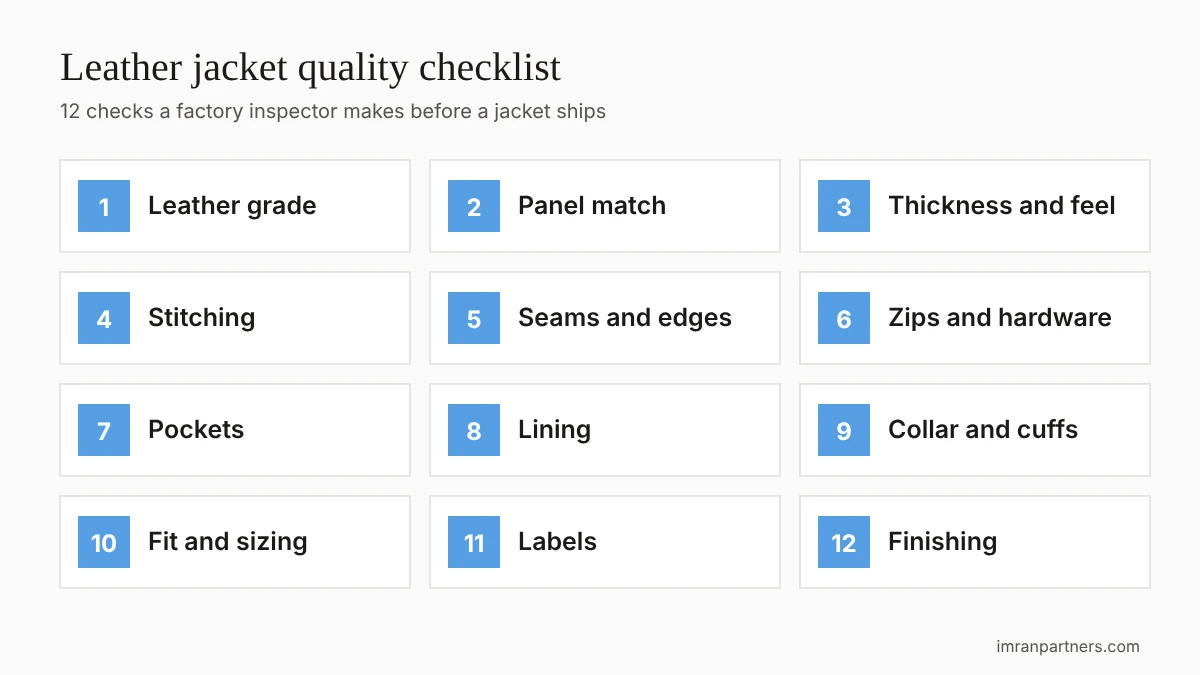
Quick answer: the 12 signs of a good quality leather jacket
| # | Check | Good sign | Warning sign |
|---|---|---|---|
| 1 | Leather grade | Full grain or top grain, natural grain visible | Plastic look, "genuine leather" with no grade, bonded leather |
| 2 | Panel match | Same colour, grain and sheen on every panel | One sleeve darker or shinier than the body |
| 3 | Thickness and feel | Even thickness, soft but firm, recovers when squeezed | Papery thin spots or stiff, cardboard-like panels |
| 4 | Stitching | Straight, even stitch length, ends locked | Skipped or wavy stitches, loose thread ends |
| 5 | Seams and edges | Edges folded or neatly finished, seams lie flat | Raw cut edges, puckered or twisted seams |
| 6 | Zips and hardware | Smooth zip, solid metal, matching finish | Sticking zip, light hollow metal, flaking plating |
| 7 | Pockets | Reinforced corners, straight welts | Gaps, crooked openings, no reinforcement |
| 8 | Lining | Fully attached, room to move, inside pockets | Pulling, loose stitches, lining shorter than shell |
| 9 | Collar and cuffs | Symmetrical, sharp points, cuffs close neatly | Uneven collar points, wavy cuff edges |
| 10 | Fit and measurements | Match the size chart or tech pack | Left and right sleeves different lengths |
| 11 | Labels | Material, care and origin stated clearly | No care label, vague or missing material |
| 12 | Finishing | No glue marks, threads trimmed, clean smell | Glue stains, chemical smell, dirty lining |
1. Leather grade: start with what the jacket is made of
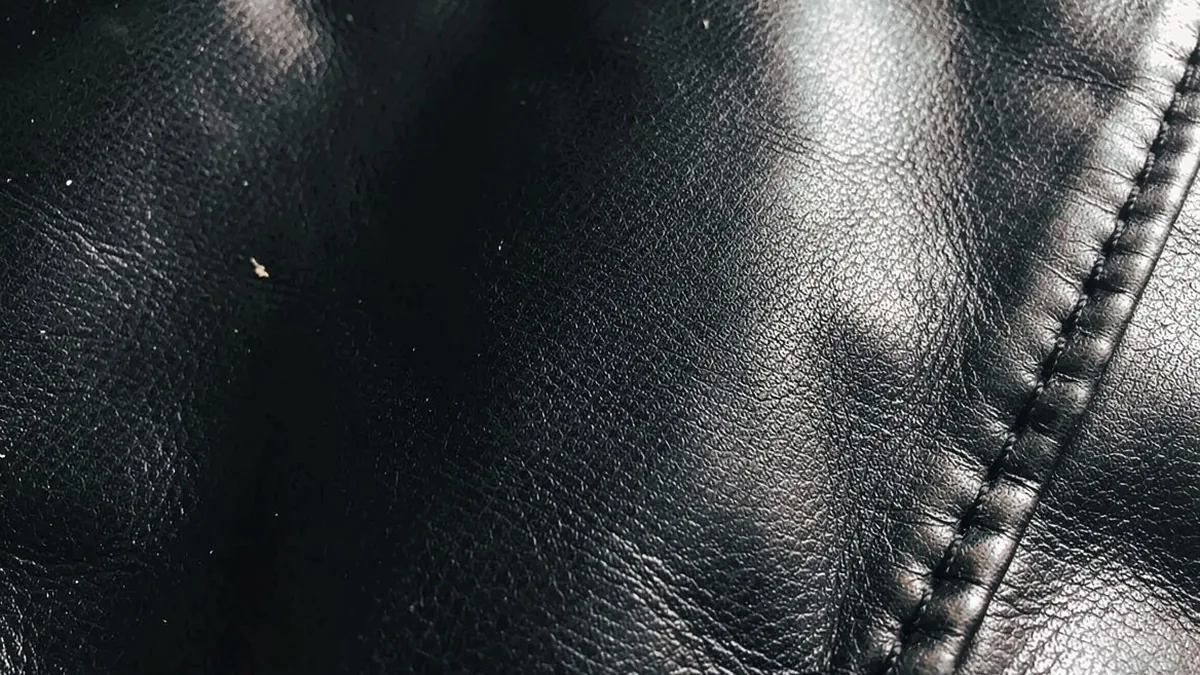
Leather quality sets the ceiling for everything else. A perfectly stitched jacket in weak leather still cracks. Full grain leather keeps the original surface of the hide, with visible pores and small natural marks, and it ages into a patina. Top grain is lightly sanded and finished, more even and more stain-resistant. Jackets labelled only "genuine leather" are often lower grades or split leather, and bonded leather is leather fibres glued together, which peels.
The hide matters too:
- Lambskin and sheepskin: very soft and light, the usual choice for fashion jackets, but less tough.
- Goatskin: firm yet flexible, with a pebbled grain; wears well.
- Cowhide: thick, heavy and tough, used for riding jackets; needs a break-in period.
Look at the surface in daylight. Real grain is slightly irregular, with pores that vary in size. If you are not sure the jacket is real leather at all, use our guide on how to tell if leather is real first, then come back to the construction checks below.
2. Panel match: every piece should look like the same hide
A jacket is cut from several hides, so a good factory sorts and matches them before cutting. Lay the jacket flat in daylight and compare the sleeves, body, collar and back. Colour, grain and sheen should look the same. One darker sleeve or a back panel with a different texture means the leather was not matched, a common shortcut in cheap production.
3. Thickness and feel: soft is good, thin is not
Squeeze the leather between two fingers. Good jacket leather feels supple but has body, and it springs back without staying creased. Thin spots, a papery feel or stiff, cardboard-like panels are signs of poor leather or uneven splitting. Fashion jackets in lambskin and sheepskin are lighter and softer; riding jackets in cowhide are thicker and heavier, so compare like with like. If a supplier gives thickness in ounces or millimetres, our leather thickness converter turns one into the other.
4. Stitching: the fastest way to judge workmanship
Stitching shows the care that went into a jacket more clearly than anything else. Check the main seams, the shoulders and around the zips:
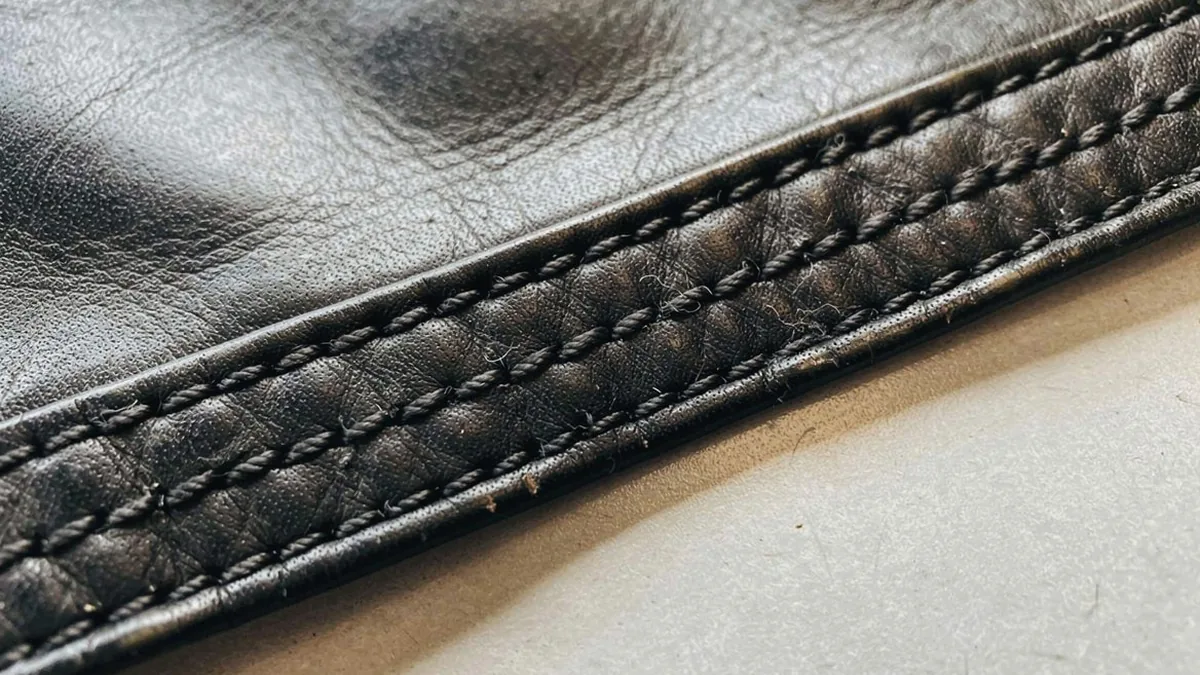
- Lines run straight and parallel to the edge, with the same stitch length from start to finish.
- No skipped stitches, loops or wavy runs.
- Thread ends are locked and trimmed, not hanging loose.
- Stress points (pocket corners, underarms, zip ends) are reinforced.
- Thread colour matches, or contrasts on purpose, the same way on both sides.
In leather, every needle hole is permanent. Unpicked and re-sewn seams leave a second row of holes next to the stitching, so look for those too.
5. Seams and edges: flat, clean and finished
Run your hand along the seams. They should lie flat without puckering or twisting. Edges at the hem, collar and front opening should be folded and stitched or neatly finished, never raw and fraying. Inside, seam allowances should be trimmed evenly and covered by the lining.
6. Zips and hardware: small parts, big difference
Hardware is where many jackets cut costs, and it is the first thing customers notice in daily use.
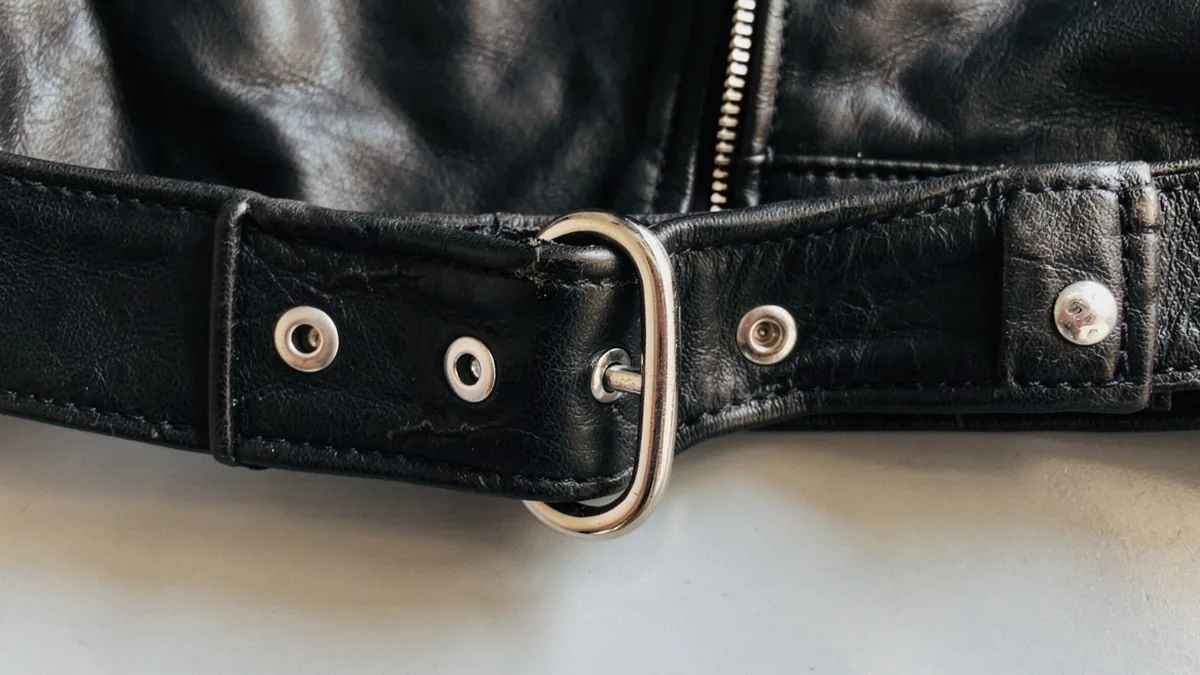
- Run every zip (zipper) fully open and closed several times. It should glide without catching.
- Metal should feel solid and cool, not light and hollow.
- Snaps should click firmly and hold; buckles should have smooth edges.
- All hardware should share one finish (silver, gunmetal or brass), with no flaking or rust.
- The zip tape should be stitched straight, with no leather bunching around it.
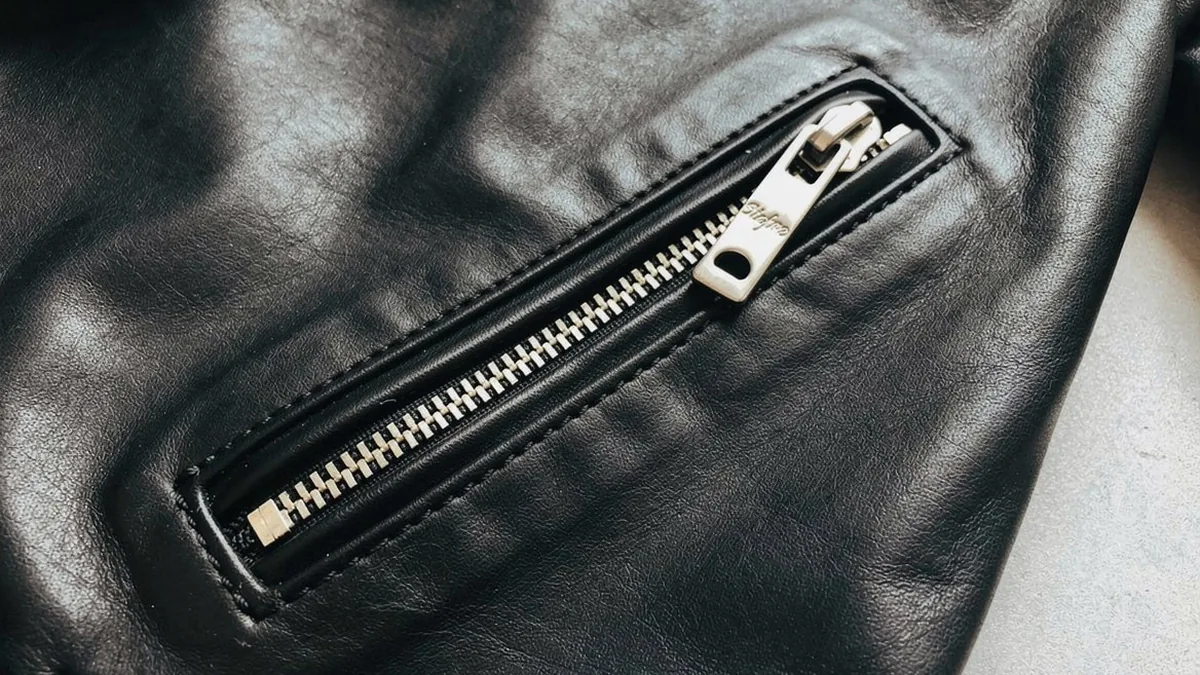
7. Pockets: check the corners
Open each pocket and look at the corners and the welt edges. Good pockets have straight openings, even welts and reinforced ends, often with a small bartack or extra stitching. Gaps at the corners or a crooked zip pocket are early signs that the jacket will tear there first.
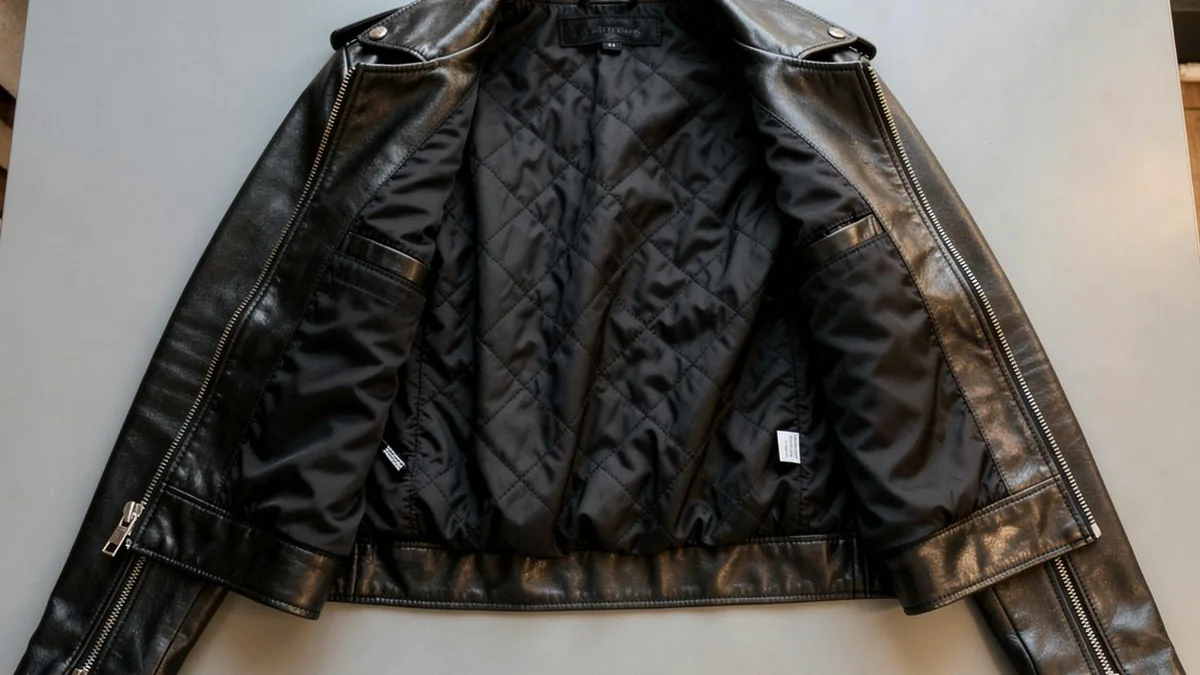
8. Lining: the inside tells the truth
Many buyers never look inside, which is why poor lining is common. Turn the jacket open and check that:
- The lining is fully attached at the hem, cuffs and front facing, with no loose or pulling seams.
- There is a little ease (often a pleat at the back) so the lining does not tear when you move.
- Quilting, if any, is even, with no bunched padding.
- Inside pockets are stitched straight and reinforced.
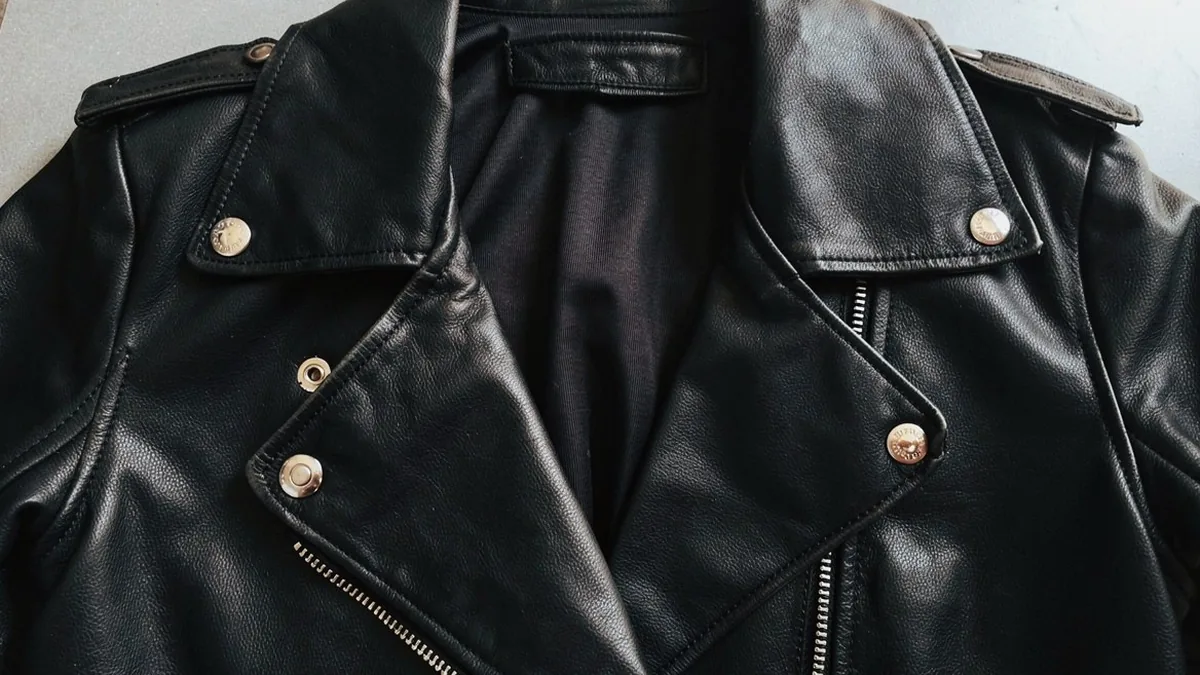
9. Collar and cuffs
Fold the collar down and compare both sides. Points and lapels should be the same size and shape, with snaps lined up. Cuffs should close neatly, with zips or snaps sitting straight and edges that do not wave. These are the parts people look at first when you wear the jacket.
10. Fit and measurements
A well-made jacket fits close without restricting movement. The shoulder seam should sit at the edge of your shoulder and the sleeves should end around the wrist bone. Lay the jacket flat and measure both sleeves: they should match. For brands, every sample should be measured against the size spec in the tech pack before it is approved.
11. Labels
A good jacket says what it is made of and how to look after it. Check for a material label (shell and lining), a size label and a care label. Missing care instructions are a small red flag on a retail jacket and a real problem for a brand, because customers who dry leather on a heater blame the jacket. Our leather care guide lists the label wording most export orders use.
12. Finishing: the last 5 minutes of production
Final finishing shows whether a factory cares. Look for glue marks around seams and pockets, untrimmed threads, chalk or pen marks, and dirt on light linings. Smell the jacket: real leather has a natural smell, while a strong chemical smell can point to heavy finishing or poor ventilation in storage.
From our experience: most quality problems we catch are not the leather itself but the last steps, uneven stitching around zips, glue stains and loose threads, because they happen when a production line is rushed. That is why we check finished pieces before packing rather than only the first sample.
For brands: how to check a leather jacket sample without visiting the factory
If you are developing a collection, the same 12 checks decide whether you approve a sample. You do not have to fly to the factory: ask for a fixed set of clear phone photos and measure against your tech pack and leather swatch.
Ask the manufacturer for 13 photos of every sample:
- Front, back and side on a hanger
- One full sleeve laid flat
- Collar and cuff close-ups
- Zips, buckles and snaps
- Every pocket type
- Inside and lining
- Main, size and care labels
- Stitching and leather close-ups in daylight
- Chest, length and sleeve measurements with a tape
Photos should be taken in daylight without flash, against a plain background and sent as original files rather than compressed chat images. Any difference from the tech pack (colour, hardware finish, lining, measurements) should be photographed and flagged before the sample ships.
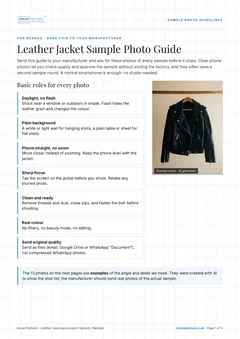
A 5-page shot list with example photos and a checklist you can send straight to your manufacturer.
⬇ Download free PDFSampling usually takes a couple of rounds, so build that into your timeline. Our guide to leather jacket MOQ, samples and costs explains what a sample costs and how long it takes, and our page on leather jacket manufacturers in Pakistan explains how we manage sampling and quality checks for brands.
Quality checks start before the sample. Ask the factory these questions before your first order, including who makes the sample and who makes the bulk.
Frequently asked questions
How can I tell if a leather jacket is good quality?
Check the leather grade, then the construction: straight even stitching, flat seams, solid smooth zips, a fully attached lining and matching panels. Good leather feels supple, has natural grain and springs back when squeezed.
What is the best leather for a jacket?
Full grain or top grain leather. Lambskin and sheepskin are soft and light for fashion jackets; cowhide and goatskin are tougher for riding and everyday wear.
Is stitching important in a leather jacket?
Yes. Stitching holds every panel together and shows the factory's workmanship. Look for straight lines, even stitch length, locked ends and reinforced stress points.
What hardware should a quality leather jacket have?
Solid metal zips, snaps and buckles with one matching finish, zips that glide without catching and snaps that close firmly.
How do I choose a good leather jacket?
Pick the hide for how you will wear it (lambskin for fashion, cowhide or goatskin for toughness), then check fit at the shoulders and sleeves and run through the construction checks: stitching, seams, hardware, lining and finishing.
How should a leather jacket lining feel?
Smooth, fully attached and slightly loose so it moves with you. A tight, pulling or loosely stitched lining tears early.
How do brands check leather jacket samples remotely?
By asking the factory for a fixed set of daylight photos (front, back, details, inside, labels and measurements) and comparing them with the tech pack and approved leather swatch before the sample ships.
A leather jacket quality checklist you can use anywhere
When you know what to look for in leather jacket quality, the checks take five minutes: grade and panel match, feel, stitching and seams, hardware and pockets, lining, collar and cuffs, fit, labels and finishing. Use them in a shop, on a delivered order or on sample photos from a factory.
If you are a brand planning leather jackets and want samples checked this way before anything ships, send us your requirements and we will match you with the right manufacturer.
Cover image and photos in this guide are AI-generated illustrations.

Muhammad Imran is the founder of Imran Partners, a leather sourcing partner based in Karachi, Pakistan. He works with leather goods manufacturers across Pakistan to help brands source jackets, bags, wallets, belts and gloves, from leather selection and sampling to quality checks before shipment.
Muhammad Imran on LinkedIn