How to Clean a Leather Jacket (and Can You Wash It?)
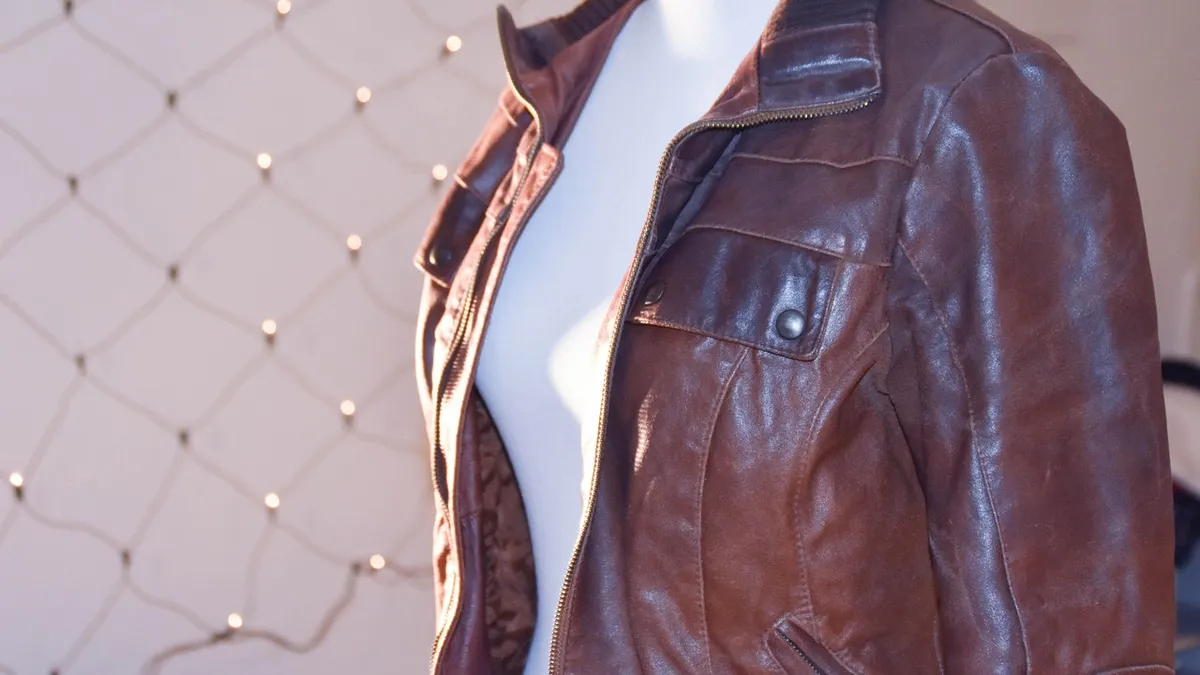
To clean a leather jacket, brush off the dust, test a mild soap solution on a hidden spot, wipe the jacket with a barely damp cloth, let it dry on a hanger away from heat, then finish with a thin coat of leather conditioner. That is the routine for most jackets. The step most guides skip comes before it: knowing what kind of leather finish your jacket has, because that decides how much water and which products it can take.
We source leather jackets from verified manufacturers in Pakistan, and the complaints that come back from shops almost always start with the wrong cleaning method, not with bad leather. This guide shows the safe way to do it, how to remove stains, and when the answer is "don't wash it at all".
First, check what kind of leather your jacket is
In the orders we handle, roughly 65 to 70% of jackets are made from pigmented (finished) leather, which has a thin coloured coating on top. The other 30 to 35% are aniline, semi-aniline or veg-tan leathers with little or no coating. Mass-market brands mostly choose pigmented or semi-aniline because the colour stays even and the surface shrugs off small scratches. Boutique and luxury brands ask for aniline and veg-tan for the natural grain and the patina it develops.
The label usually just says "leather", so do a water-drop test: put one small drop of water on a hidden spot, like the inside facing or under the collar, and watch it for 30 seconds.
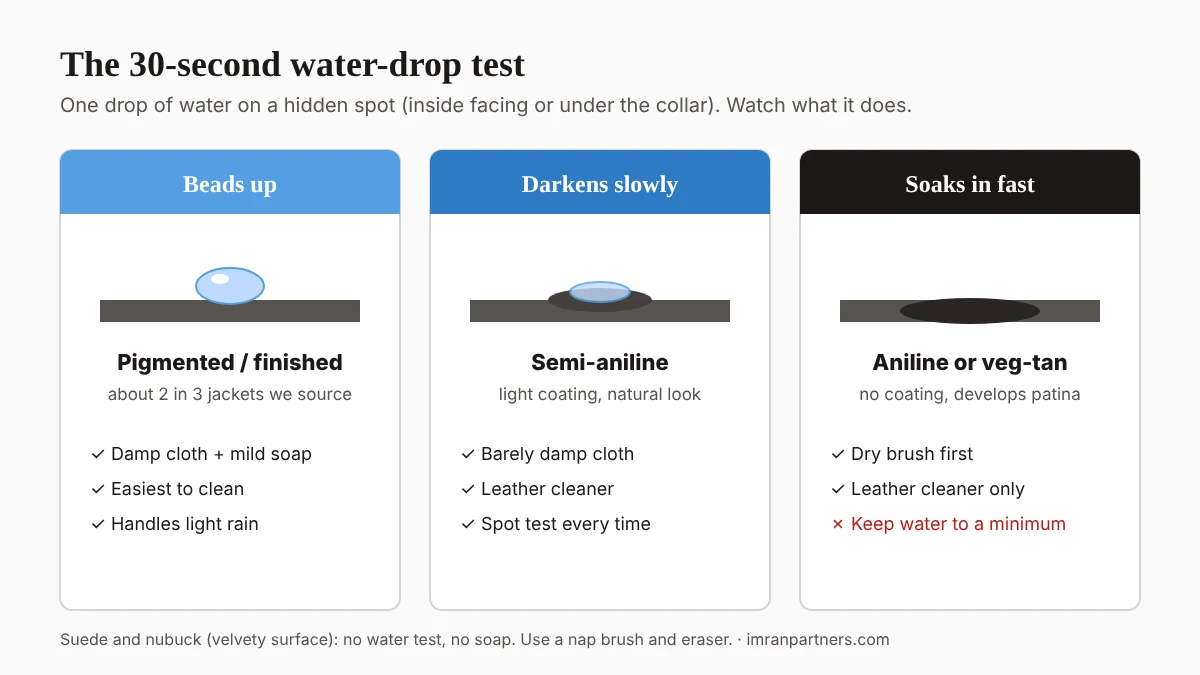
| What the drop does | Likely finish | How to clean it |
|---|---|---|
| Beads up and sits on top | Pigmented / finished | Damp cloth and mild soap. The easiest jacket to clean. |
| Darkens slowly, then dries back | Semi-aniline | Very lightly damp cloth, leather cleaner, spot test every time. |
| Soaks in fast, leaves a dark mark | Aniline or veg-tan | Dry brush and leather cleaner only; keep water to a minimum. |
| Velvety, napped surface | Suede or nubuck | No water or soap; use a nap brush and eraser (see how to clean nubuck). |
| Plastic feel, fabric backing at the edges | Faux (PU) leather | Soap and water; see the faux leather section below. |
Not sure it is real leather at all? Our guide on how to tell if leather is real has seven quick checks.
Cleaning is one part of looking after leather. Our leather care guide covers conditioning, protection and storage for every type of leather.
What you need
- Two soft cloths, one damp and one dry
- A soft brush (a clean shoe brush or soft toothbrush)
- A pH-balanced leather cleaner, or a few drops of gentle unscented liquid soap in a bowl of lukewarm distilled water
- A pH-balanced leather conditioner made for clothing leather
- A wide, padded hanger
Distilled water matters if your tap water is hard, because minerals can leave pale marks on dark leather.
How to clean a leather jacket in 5 steps
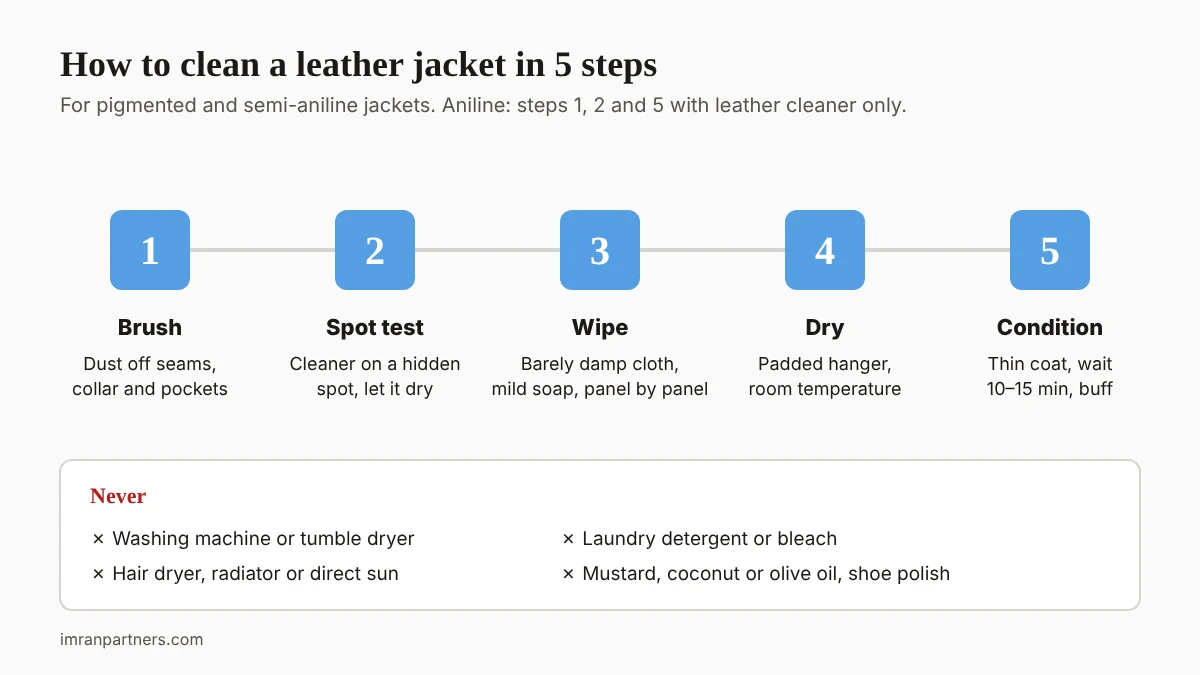
1. Brush off dust and dirt
Brush the seams, collar and pocket edges first. Grit rubbed in with a wet cloth acts like sandpaper.
2. Spot test
Wipe a little cleaner on a hidden spot and let it dry. If the colour changes or comes off on the cloth, stop and use only a dry brush, or take the jacket to a leather specialist.
3. Wipe panel by panel
Dip the cloth in the soap solution and wring it out until it is barely damp. Wipe one panel at a time with light, overlapping strokes; give the collar, cuffs and pocket openings a second pass, because they collect the most body oil. Never pour water on the leather or scrub hard.
4. Wipe off and dry
Go over the jacket once more with a clean, lightly damp cloth to lift any soap, pat it dry, and leave it on a padded hanger at room temperature for several hours. Keep it out of direct sunlight and away from radiators and hair dryers.
5. Condition
Once it is fully dry, work a small amount of conditioner into the leather in circles, wait 10 to 15 minutes and buff off the excess. A thin coat is enough; too much leaves the jacket sticky.
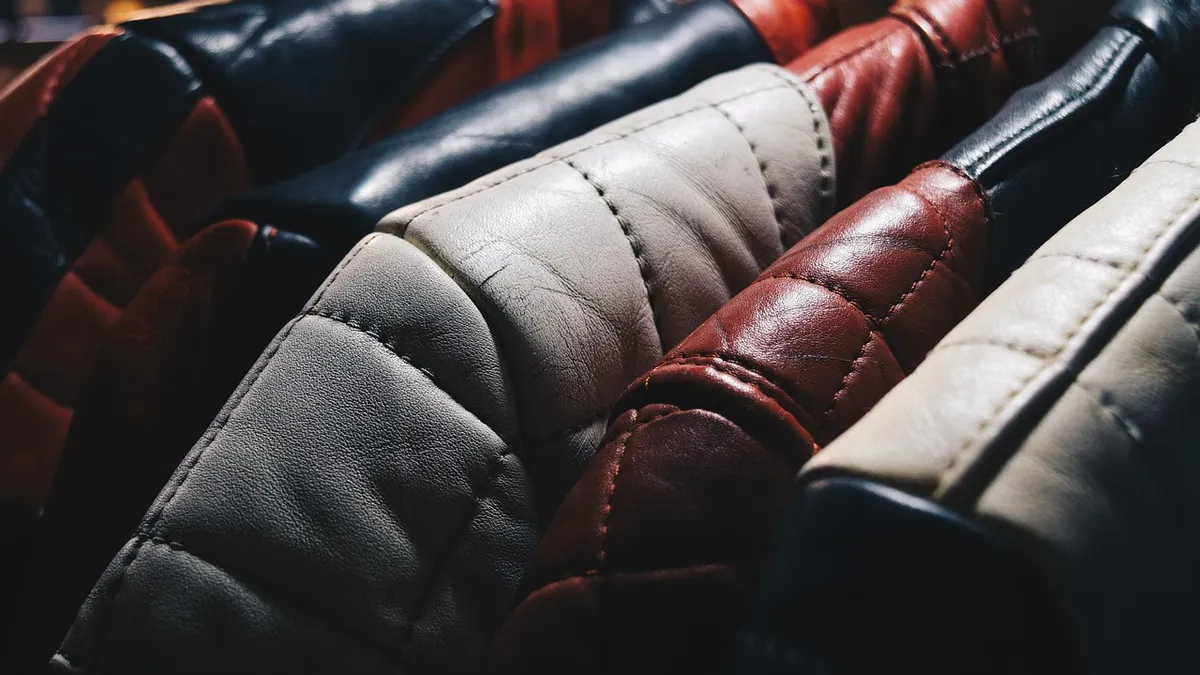
This is close to what happens in the factory. At the jackets we source, each piece is dusted with a microfiber cloth or an air gun, given a light wipe of neutral leather cream or a light wax conditioner for softness and a natural shine, finished leathers get a thin protective top-coat spray where needed, and the lining and seams are smoothed with a steam former before the jacket goes into its polybag.
How to clean the inside and lining
Sweat collects at the collar, underarms and lower back, and that is where odor starts. Turn the jacket inside out, check its label, and wipe the inside with a cloth dampened in the soap solution without soaking it, so water does not reach the back of the leather. For smells, sprinkle baking soda inside, leave it overnight in a dry room, then brush it out and air the jacket.
How to remove stains from a leather jacket
Act quickly, spot test first, and dab rather than rub.
| Stain | What to do |
|---|---|
| Grease or oil | Blot, cover with baking soda or cornstarch overnight to draw the oil out, brush off, repeat if needed. |
| Ink | On pigmented leather, dab with a cotton bud and a little rubbing alcohol, then condition. On aniline leather, leave it to a specialist. |
| Water spots | Wipe the whole panel lightly so it dries evenly. |
| Winter salt marks | Wipe with one part white vinegar to two parts water, then plain water; dry and condition. |
| Mold or mildew | Brush off outdoors, wipe with 1:1 rubbing alcohol and water, dry in the shade and condition. Deep mold in the lining needs a professional. |
Can you wash a leather jacket in a washing machine?
No, not a normal leather jacket. The machine soaks the leather, the spin bends it while wet, and it dries stiff, shrunken and sometimes cracked, while detergent strips oils and colour. Rare "washable leather" garments exist and say so clearly on the label; everything else stays out of the washer and the tumble dryer.
This is behind most complaints we see from shops: customers clean the jacket at home with plain water or laundry detergent, and the leather turns stiff or the colour fades. That is why the label we put on jackets for buyers most often is "Specialist leather clean only" or "Professional leather clean only", with do-not-wash, do-not-iron and do-not-tumble-dry symbols.
Should you dry clean a leather jacket?
Only at a leather specialist. Ordinary dry cleaning solvents can pull the natural oils out of leather, while a specialist cleans with leather products and re-oils or re-colours where needed. Once every year or two is plenty, or for big stains, mold or an aniline jacket you would rather not clean yourself.
Can you wear a leather jacket in the rain?
A light shower is fine for most jackets, especially pigmented ones with a protective top coat. Heavy rain is a risk for aniline and veg-tan leather, which drinks water quickly. If your jacket gets soaked, blot it with a towel, hang it up indoors, let it dry naturally (it can take a day) and condition it afterwards, because water pulls oils out as it evaporates.
The mistake we hear about most is drying a wet aniline jacket with a blow dryer or on a radiator. Fast heat shrinks and stiffens the leather and can crack it. Leather is water resistant at best, never waterproof; our article is nubuck waterproof? explains how water affects different leathers.
How to get wrinkles out of a leather jacket
- Hang it: storage creases usually drop out after a few days on wide shoulders.
- Steam it: hang it in the bathroom during a hot shower, or hold a steamer at least 30 cm away, then smooth the leather by hand.
- Iron only as a last resort: lowest setting, no steam, a cotton cloth between the iron and the leather, keep it moving.
Jacket clean but still stiff? Our guide on how to soften leather shows what works (and which home remedies to skip).
How to clean a faux leather jacket
Faux leather (PU or PVC) is plastic, so it needs no conditioner. Wipe it with soap and water, rinse with a damp cloth and let it dry. Some faux leather jackets can go in a washing machine on a cold, gentle cycle inside a laundry bag if the label allows, but never in a tumble dryer, because heat makes the coating crack and peel.
How to clean a thrifted or vintage leather jacket
Air it outside for a day, check the inside and pockets for mold, brush it well and clean the inside before the leather. Then follow the 5 steps. Old leather is often dry and may need a second thin coat of conditioner the next day. If the leather is cracked through or flaking, no cleaner will fix it.
How often to clean and condition a leather jacket
| How you wear it | Wipe down | Full clean | Condition |
|---|---|---|---|
| Daily in the season | Every 2 to 4 weeks | 2 to 3 times a season | Every 2 to 3 months |
| Weekly | Monthly | Once or twice a year | 2 to 3 times a year |
| A few times a year | Before storage | Before storage | Once a year |
The same care rules apply to footwear. If your leather boots feel tight, read how to stretch leather boots before you reach for heat or water.
What never to use on a leather jacket
The biggest misconception we hear is that leather is waterproof and that any household oil will make an old jacket look new. In our experience it does the opposite: ordinary oils block the pores so the leather cannot breathe, and over time they go rancid and start to smell. Leather only needs a dedicated pH-balanced conditioner and, if you like, a protector spray.
| Avoid | Why |
|---|---|
| Laundry detergent | Strips oils and colour; leather goes stiff |
| Mustard, coconut or olive oil | Blocks the pores and turns rancid |
| Shoe polish | Seals the surface and rubs off on clothes |
| Baby wipes, household wipes | Often contain alcohol or cleaners that dry the finish |
| Bleach, ammonia, nail polish remover | Removes colour and damages the finish |
| Hair dryer, radiator, direct sun | Shrinks, stiffens and cracks the leather |
Cleaning footwear too? Our guide on how to clean leather boots covers salt, mud and water stains step by step.
For brands: put the right care instructions on the label
If you are developing your own leather jackets, the care label is part of the product. Match it to the finish, add a small care card in the pocket (damp cloth, leather conditioner, never heat) and you will get fewer returns. We help brands choose the finish, labels and care cards with the leather jacket manufacturers in Pakistan we work with.
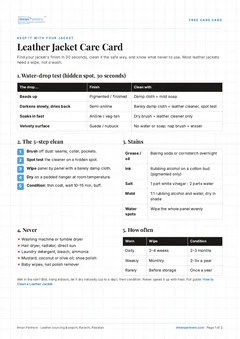
A printable card with the water-drop test, the 5-step routine, a stain chart and a care-label template for brands.
⬇ Download free PDFFrequently asked questions
Is it necessary to wash a leather jacket?
No. Wipe it down, clean spots as they happen and condition it a few times a year. Over-cleaning dries leather faster than wearing it.
Can you put a leather jacket in the washing machine?
Only if the label says washable leather, which is rare. A normal leather jacket comes out stiff, shrunken and faded.
Can I use vinegar to clean a leather jacket?
Diluted white vinegar works for salt marks and light mildew on finished leather. Spot test, wipe with plain water after, and condition.
How do you clean a leather jacket at home without damaging it?
Use a barely damp soft cloth with leather cleaner, test first, let it dry away from heat and condition it.
Can you iron a leather jacket?
Only on the lowest setting, without steam, with a cloth between the iron and the leather. Hanging and steaming are safer.
How do you make a leather jacket smell better?
Air it in the shade, leave baking soda inside overnight and wipe the lining. A musty smell can mean mold.
Cleaning a leather jacket: the bottom line
Knowing how to clean a leather jacket comes down to three things: find out its finish, use as little water as you can, and never dry it with heat. A damp cloth, a gentle cleaner and a good conditioner keep most jackets looking good for years. If you are planning your own leather jacket line and want leather that is easy for your customers to care for, request a quote and tell us the look and finish you want.
Cover photo: swarrelmann on Pixabay

Muhammad Imran is the founder of Imran Partners, a leather sourcing partner based in Karachi, Pakistan. He works with leather goods manufacturers across Pakistan to help brands source jackets, bags, wallets, belts and gloves, from leather selection and sampling to quality checks before shipment.
Muhammad Imran on LinkedIn