Leather Patina: What It Is and How Leather Ages Well
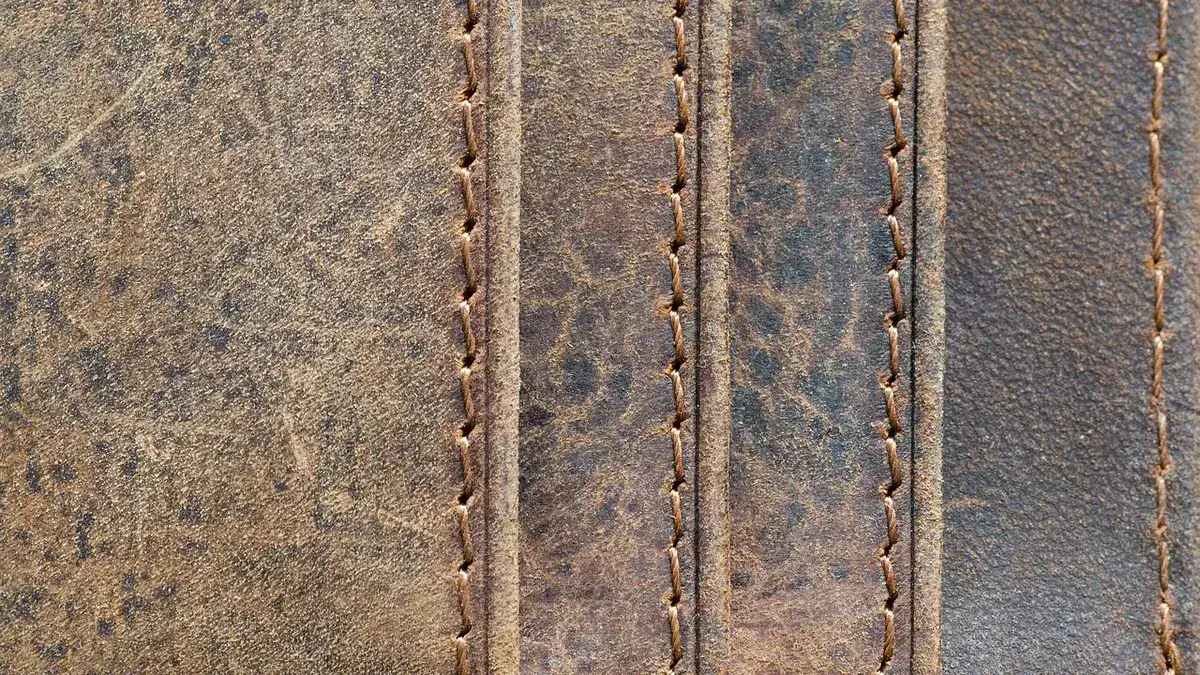
Leather patina is the soft sheen, deeper colour and lived-in character that good leather picks up as you use it. It is the reason a ten-year-old wallet can look better than a new one. But not every leather can develop a patina, and not every change on old leather is patina. Some of it is plain damage.
What is leather patina?
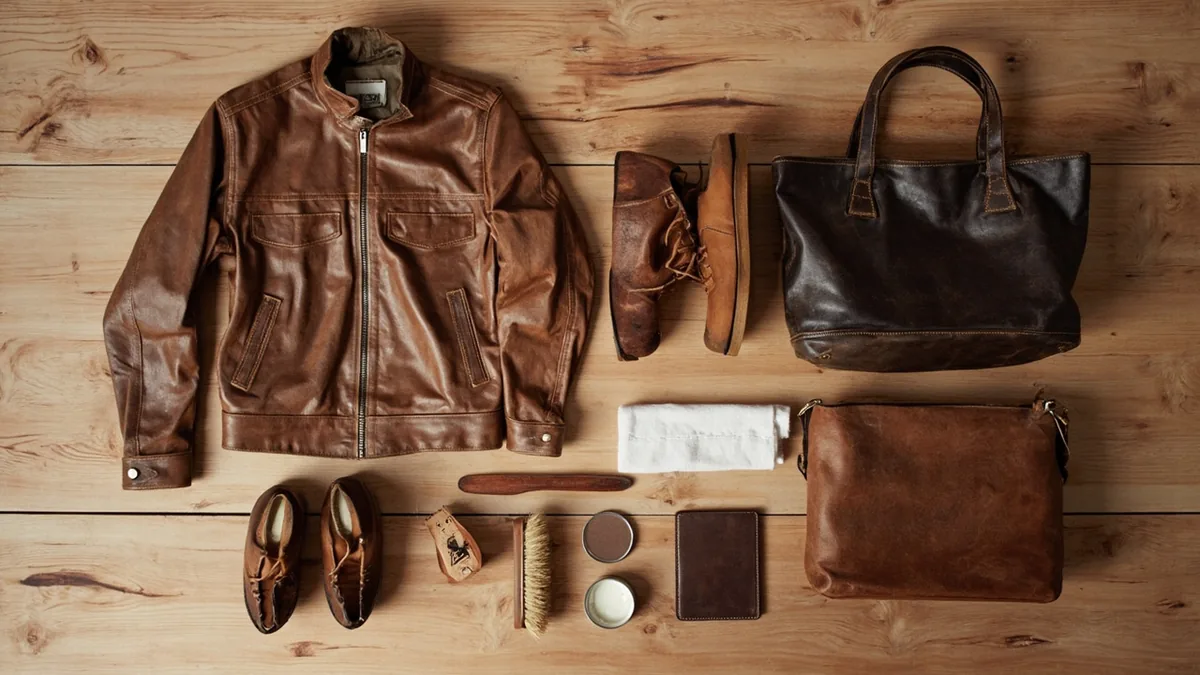
Leather patina is the natural change in colour, sheen and texture that develops on the surface of real leather through light, handling, air and everyday wear. The leather usually gets a little darker, softer and glossier in the places you touch most, like a bag handle, the edges of a wallet or the cuffs of a jacket.
The word comes from metals, like copper turning green. A good patina is a plus: it proves the item is real leather of a quality that ages well. It only forms on the grain, the outer side of the skin, so leather type and surface matter a lot.
What causes patina on leather?
Sunlight and UV
Light changes the natural oils and tannins in the leather. Pale vegetable tanned leather reacts most: a natural tan strap can turn honey-brown within weeks. Too much direct heat, though, dries the leather out.
Skin oils and handling
Every time you hold a bag handle or pocket a wallet, a little oil from your skin goes into the leather. Over time it deepens the tone and adds a soft shine. That is why patina is uneven: it follows how you use the item.
Air and humidity
Oxygen and moisture slowly change the surface oils. Leather ages faster in hot, humid places and can stiffen in very dry air.
Friction and wear
Rubbing polishes the grain, a bit like burnishing, and folds add creases, like at the elbows of a jacket.
Dye transfer and everyday contact
Raw denim, rain or a drop of coffee leave small marks that blend into the patina over time.
Which leathers develop a patina (and which don't)?
Patina needs an open grain that can absorb light, oil and air. The more the surface is sanded, sealed or painted, the less patina you get:
| Leather type | Patina potential | Why |
|---|---|---|
| Full grain, vegetable tanned, aniline (no top coat) | Very high | Open natural grain, tannins darken with light and oil |
| Full grain, chrome tanned, aniline or semi-aniline | Medium to high | Natural grain, but chrome tanning changes colour less |
| Pull-up (oil or wax loaded) leather | High | Oils and waxes shift with every bend and scuff, so it lightens and darkens fast |
| Top grain, semi-aniline | Medium | Lightly sanded and coated, so the change is slower and softer |
| Corrected grain / pigmented (painted finish) | Low | Grain is sanded off and sealed under pigment; it wears instead of ageing |
| Suede and nubuck | Low (different kind) | No smooth grain to polish; it darkens and flattens where touched |
| Bonded leather | None | Leather fibres glued to a backing; the surface peels instead |
| PU / faux leather | None | Plastic coating; it cracks or flakes, it never develops a patina |
The biggest myth: "all real leather develops a patina"
This is the misunderstanding we hear most often from buyers. It is not true. If the leather carries a thick pigment layer, a polyurethane top coat or a heavy acrylic sealant, it cannot absorb light, oil or sweat, so it never patinates. Instead, over the years, the coating cracks or peels. And that coated leather is the majority: in our experience, well over three quarters of commercial leather goods have this kind of finish. Patina only happens on porous, breathable leathers such as veg-tan, aniline, nubuck and pull-up leather.
"Genuine leather" on a label usually means a lower grade, so do not expect much patina from it; our guide on how to tell if leather is real explains the label words. Nubuck ages too, just differently (see what nubuck leather is), and goatskin, with its tight pebbled surface, ages very well (see our goatskin leather guide).
Leather patina before and after: a typical timeline
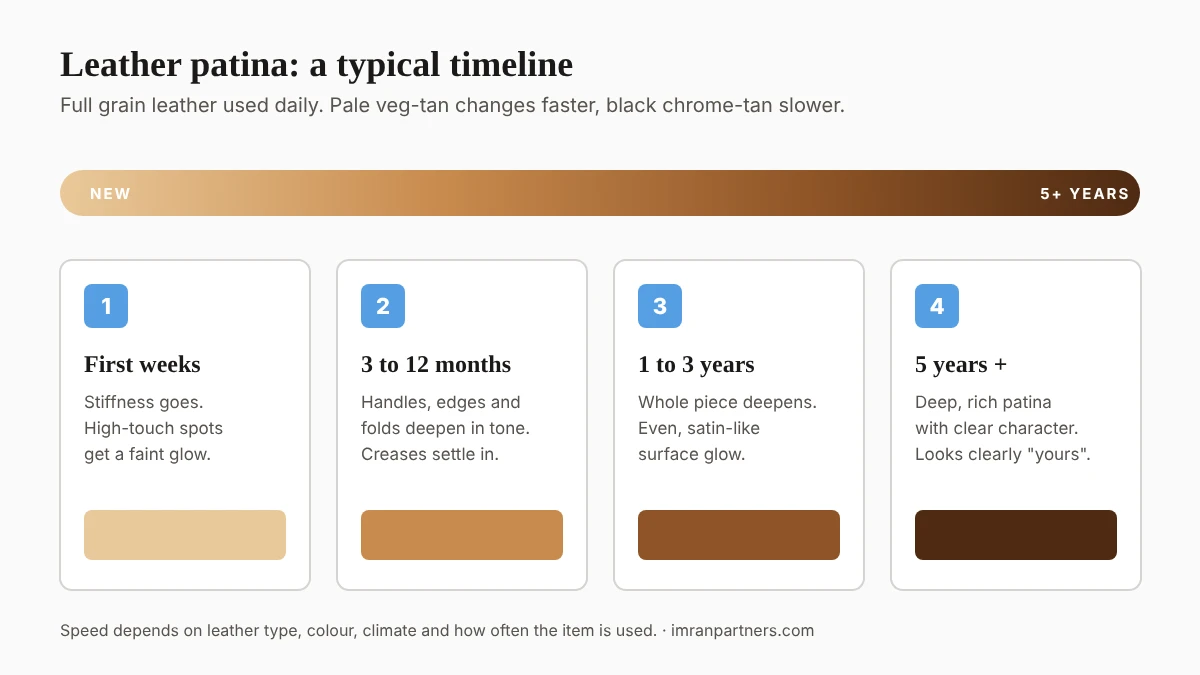
How fast leather develops a patina depends on the leather, the colour, the climate and how often you use the item. A pale veg-tan strap changes fastest; a black chrome tanned jacket slowest. As a rough guide for daily use:
- First weeks: the stiffness goes and high-touch spots pick up a faint glow.
- 3 to 12 months: handles, edges and folds turn visibly deeper in tone; creases settle in.
- 1 to 3 years: the whole piece deepens and the surface has an even, satin-like glow.
- 5 years and more: a deep, rich patina with clear character; the item looks clearly "yours".
Does black leather develop a patina?
Yes, but you see it less. Black leather patina shows mostly as a change in gloss, not tone: the surface goes from flat to softly polished, and on some dyes the edges turn slightly brown. On a black leather jacket it shows mostly in the creases.
Patina or damage? How to tell the difference
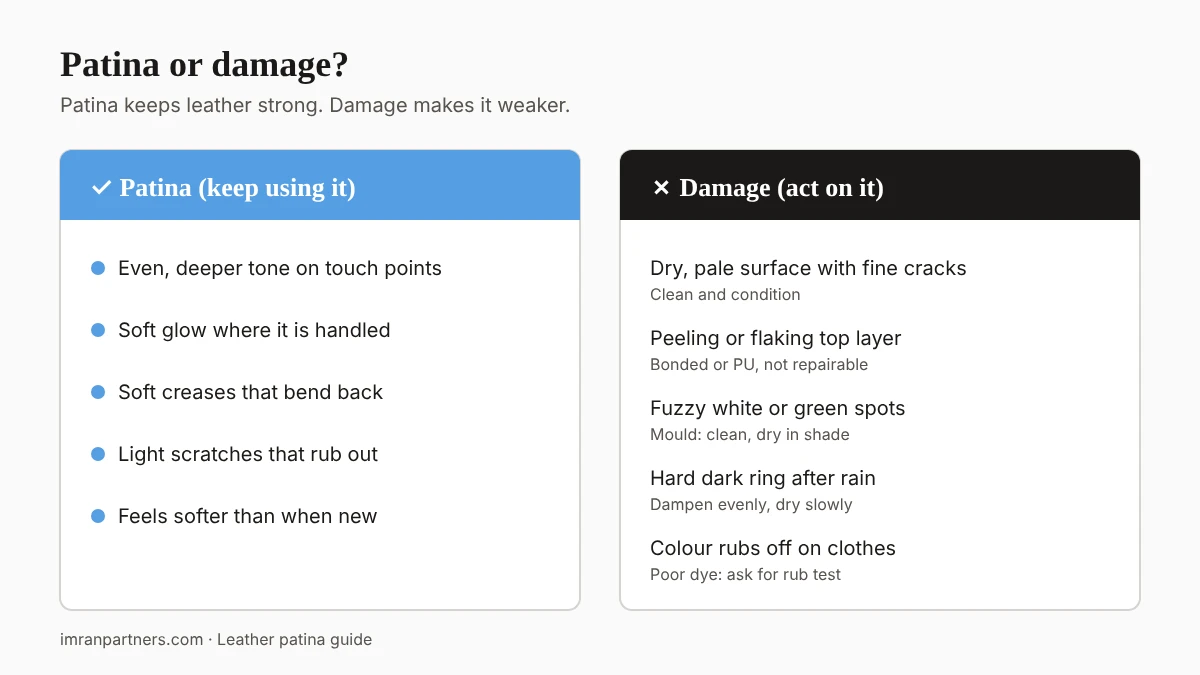
Good patina makes leather richer and softer; damage makes it weaker. Use this table on an old item or a used sample:
| What you see | Patina or damage? | What to do |
|---|---|---|
| Even deepening of tone, soft glow on touch points | Patina | Nothing; keep using it |
| Soft creases that bend back smoothly | Patina | Nothing |
| Small light scratches that fade when rubbed | Patina (on aniline leather) | Rub with a clean finger or cloth |
| Dry, pale surface with fine cracks | Damage (drying) | Clean and use a leather conditioner |
| Peeling or flaking top layer | Damage (bonded or PU) | Not repairable; it is not real full grain |
| White or green fuzzy spots, musty smell | Damage (mould) | Clean right away, dry in shade, store with airflow |
| Hard, dark ring after rain | Damage (water stain) | Dampen the whole panel evenly and let it dry slowly |
| Colour rubbing off onto clothes | Damage (poor dye or finish) | Ask the supplier about rub-fastness testing |
If your leather feels dry and stiff rather than aged, it needs oils back, not more time. See how to soften leather safely.
How to encourage a good leather patina
You cannot buy a real patina, but you can help it along:
- Use it often. Handling is the single biggest driver. A wallet in a drawer, or boots in a box, stay new.
- Handle it with clean, dry hands. Natural skin oils help; lotion, food and dirt leave blotches.
- Give it some light, not baking sun. A few hours of indirect sunlight helps the tone develop evenly. Never leave it in a hot car.
- Condition lightly. A thin layer of leather conditioner now and then keeps the fibres supple and durable. Too much conditioner makes leather sticky and dark in patches.
- Skip harsh cleaners and plastic bags. Alcohol and wipes strip oils; plastic traps moisture and invites mould. Use a cotton dust bag.
Want to slow it down instead, on a light bag for example? Keep it out of direct light, use a protector spray made for aniline leather, and wipe spills straight away.
Caring for a jacket? Our step-by-step guide on how to clean a leather jacket shows how to clean each finish without washing away the patina.
A good patina needs the right routine. Our leather care guide explains how often to clean and condition full grain leather.
Buying patina-friendly leather: what to ask your manufacturer
If you want your products to age like this, write it into your spec. Factories default to what is cheap and consistent, usually sanded leather with a painted surface. Use clear words:
- Grain: "full grain" (not "genuine leather" or "top grain" if you want maximum patina).
- Tannage: "vegetable tanned" for the strongest colour change, or "chrome tanned" if you need softness, colour range and water resistance with a milder patina.
- Surface: "aniline" or "semi-aniline, light top coat". Avoid "pigmented" or "corrected".
- Animal and thickness: name it (cowhide, goatskin, lambskin) and thickness in mm.
- Approval: approve a physical swatch and keep a cut of it to compare with bulk.
A simple patina test for samples: press your thumb firmly on the grain for 10 seconds and rub it lightly. On aniline leather the spot turns a shade deeper. Put one drop of water on a hidden spot; aniline leather absorbs it, while a coated surface lets the drop sit on top. Leave half the swatch in indirect sunlight for a few days with the other half covered, then compare. If nothing changes, the leather will not develop much patina in use either.
Who actually orders patina leather, and what it costs
From the orders we handle, only about 15 to 20% of B2B buyers ask for pure veg-tan or natural aniline leather. They are mostly premium, heritage and artisan brands. By product:
- Wallets and belts: the highest demand. Pocket friction, hand oils and sweat give them a patina fastest, and it looks great.
- Bags and briefcases: high-end travel bags and satchels often go veg-tan or semi-aniline for a rich vintage look over time.
- Jackets: full veg-tan is rare, around 5 to 10% of jacket enquiries, because it starts out stiff. Jacket buyers mostly choose semi-aniline or a pull-up chrome or veg blend that stays soft and still picks up character from scuffs.
Supply is the other side. In most tanneries we deal with, 75 to 80% of production is chrome tanned, pigmented or corrected grain. Veg-tan and full aniline come from specialised tanneries, because they need clean, low-blemish hides: there is no paint layer to hide marks. Chrome tanning takes a day or two; vegetable tanning takes weeks. That is why veg-tan or high-grade aniline usually costs 2 to 3 times more than standard pigmented chrome leather. As a ballpark from recent quotes, standard chrome leather often sits around $2.50 to $3.50 per sq ft, while good veg-tan runs from about $6 to $10 per sq ft or more. Prices move with raw material, thickness and market, so always get a current quote.
A real case: when patina was reported as a defect
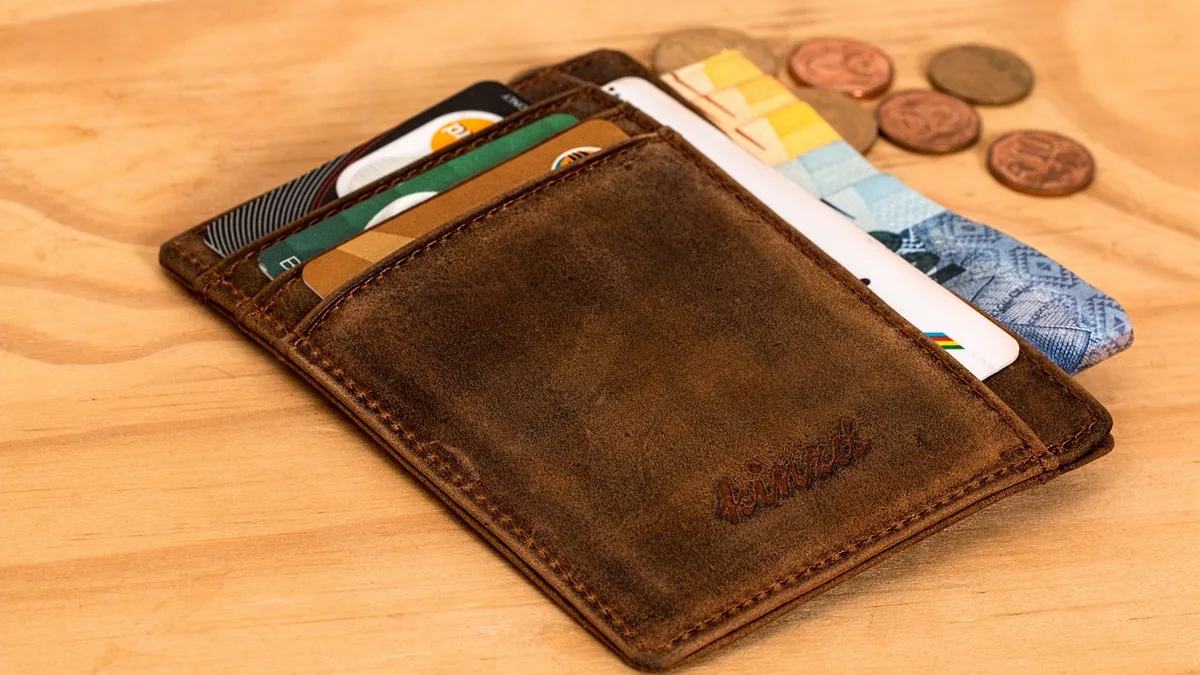
A fashion-focused buyer ordered heritage-style veg-tan wallets through us. Samples were approved, bulk shipped, and then the buyer's QC team raised a claim: "water spots and dark shading, the leather looks defective". The cause was simple. Workers had handled the wallets with bare hands during packing and store inspection, and veg-tan absorbs moisture and skin oil. What QC called stains was the very start of the patina. We explained that full grain veg-tan never stays uniform like coated leather, and showed a sample wallet after two to three weeks of use, with the spots blended into an even sheen. The lesson for brands: tell your QC and warehouse teams what veg-tan does, use gloves for inspection, and put a small care card in the box.
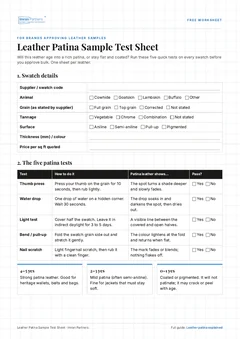
A two-page worksheet to test a leather swatch for patina and write it into your spec before you approve bulk.
⬇ Download free PDFWe help brands source jackets and leather goods from verified manufacturers we work with in Pakistan, including full grain and vegetable tanned options. See our leather jacket manufacturers in Pakistan page or our wider leather goods manufacturing overview. If you are planning a first order, our guide to leather jacket MOQ, samples and costs explains how sampling works.
Frequently asked questions
Is leather patina a good thing?
Yes. A natural patina shows the item is made from real, good-quality leather and adds character and value. Damage such as cracking, peeling or mould is not patina.
How long does it take for leather to develop a patina?
Pale veg-tan leather can change in a few weeks. Most quality leather shows a clear patina within the first year of daily use, and a deep one after several years.
Does all leather develop a patina?
No. Full grain aniline and vegetable tanned leathers patina best. Sanded and painted, bonded and PU leathers do not develop a real patina.
Can you speed up leather patina?
Use the item every day, handle it with clean hands and give it some indirect sunlight. Avoid shortcuts like heavy oils or baking it in the sun; they cause blotches or dry the leather.
Can you remove or reverse patina?
Not fully. A professional can clean and recolour leather, but the change is in the fibres themselves. If you want leather to stay light, protect it from the start.
Does a leather jacket develop a patina?
Yes, a full grain leather jacket develops patina in the creases, collar, cuffs and pockets. Lambskin and goatskin jackets with aniline or semi-aniline surfaces show it most.
The bottom line on leather patina
Leather patina is the best proof of real, well-made leather: it only happens on an open, natural grain that is used and cared for. Choose full grain, aniline or veg-tan leather, use it often, and you get an item that looks better every year. If you are building a product line and want leather that ages like this, request a quote and tell us the look you want; we will match you with the right leather and manufacturer.

Muhammad Imran is the founder of Imran Partners, a leather sourcing partner based in Karachi, Pakistan. He works with leather goods manufacturers across Pakistan to help brands source jackets, bags, wallets, belts and gloves, from leather selection and sampling to quality checks before shipment.
Muhammad Imran on LinkedIn