How to Soften Leather: What Works and What to Avoid
The safest way to soften leather is to clean it, rub in a thin coat of leather conditioner, flex it gently with your hands, and then wear or use it. Repeat after a day if it is still stiff. Heat, Vaseline and kitchen oils promise faster results, but they usually leave leather darker, sticky or weaker. Below: what works on new, old or hard leather, item by item, and which "hacks" to skip.
We source leather jackets and goods from tanneries and factories in Pakistan, so we also see the other side: how leather is made soft before it ever reaches you. That explains why some leather turns buttery with a little care, and some never will.
Why leather gets stiff
- It loses its oils. Leather is soft because oils sit between its fibres. Over time, direct sunlight, heat, dry air and cleaning wash or bake them out, and the fibres start to stick together.
- It got wet and dried badly. Water carries oils out as it evaporates; drying near a heater makes it worse.
- It is new and thick. Thick full grain cowhide boots, belts and bags are firm by nature and need time to break in.
- It has a heavy surface coating. A thick pigment or top coat stiffens the surface.
- It was made that way. Some leather simply was not softened enough at the tannery (see the next section).
Most stiffness comes from missed care. See our complete leather care guide for a simple schedule that keeps leather supple.
How soft leather is made at the tannery
Softness is mostly built in during manufacturing. In the tanneries we work with, it comes from two stages:
- Fatliquoring (chemical). After tanning, the fibres dry out and want to stick together. Oil-in-water emulsions (animal, vegetable or synthetic oils) are worked into the leather so the fibres stay lubricated. This is the most important step for softness: the quality and amount of fatliquor decide how buttery the leather will feel.
- Drum milling (mechanical). The dried leather tumbles in a large rotating wooden drum, which breaks the bonds between fibres and brings out a natural pebbled grain ("milled" leather). For normal softness the leather tumbles for about 2 to 4 hours; for extra-soft garment leather, 8 to 12 hours, sometimes up to 16 depending on the hide and thickness.
Staking (machines that vibrate and press the leather) and controlled toggling or vacuum drying also stop it from drying hard.
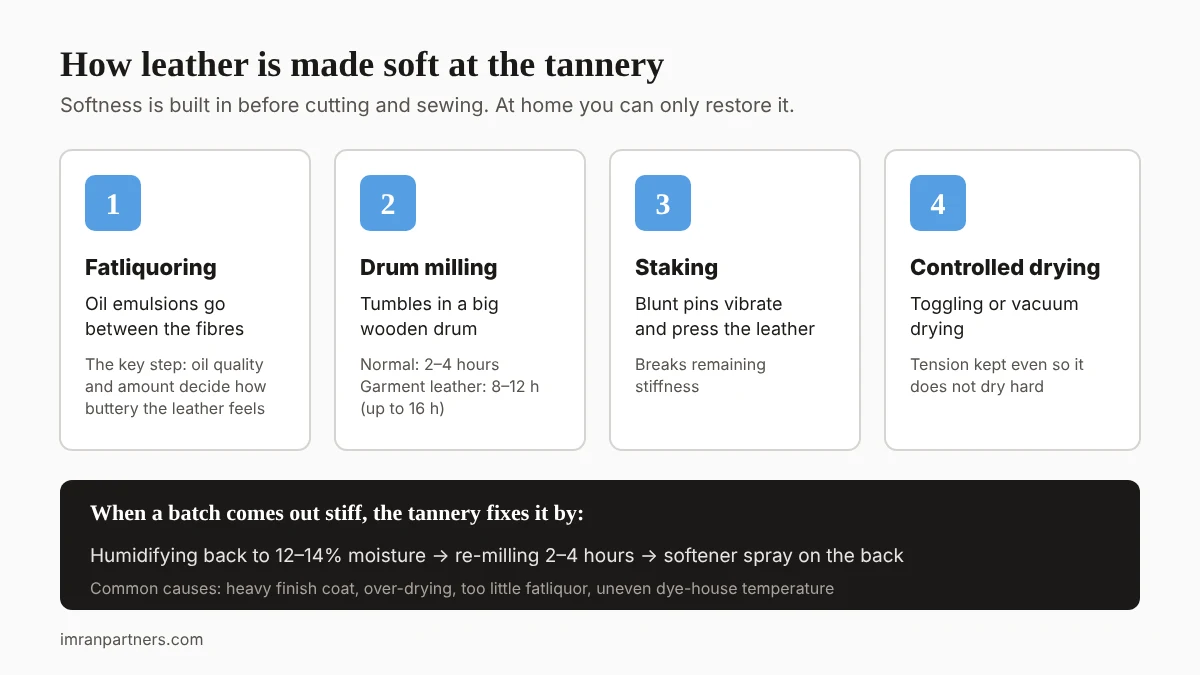
When a batch comes out stiff or "boardy", the usual causes are a heavy finish coat, over-drying, too little fatliquor or uneven dye-house temperatures. Tanneries fix it by putting the leather in a humidifying room until it is back to about 12 to 14% moisture, re-milling it for 2 to 4 hours, and spraying a penetrating softener on the back. At home you cannot repeat any of that, which is why conditioner and use are the realistic tools.
How to soften leather in 5 steps
This works for smooth leather: jackets, bags, belts, shoes, boots and gloves. Suede and nubuck leather are different (see the item section).
1. Clean it
Brush off dust and wipe the leather with a barely damp cloth. Conditioner rubbed into dirt pushes grit into the grain.
2. Spot test
Put a little conditioner on a hidden spot and let it dry. Most conditioners darken leather slightly for a day; if it stays much darker or blotchy, use less or try a lighter cream.
3. Condition thinly
Work a small amount of leather conditioner into the leather with a soft cloth or your fingers, in circles. Pay extra attention to creases and stiff areas. Wait 15 to 20 minutes and buff off what has not soaked in.
4. Flex it by hand
Gently bend, roll and squeeze the stiff parts, like the collar and cuffs of a jacket, a belt along its length, or the flex point of a shoe. This does at home what drum milling does in the tannery, on a small scale.
5. Use it and repeat
Wear the jacket, carry the bag, walk in the boots. Body warmth and movement are the best softeners there are. If it is still stiff after a day, repeat steps 3 and 4, but give each coat time to absorb.
What works and what doesn't: softening methods compared
| Method | Verdict | Why |
|---|---|---|
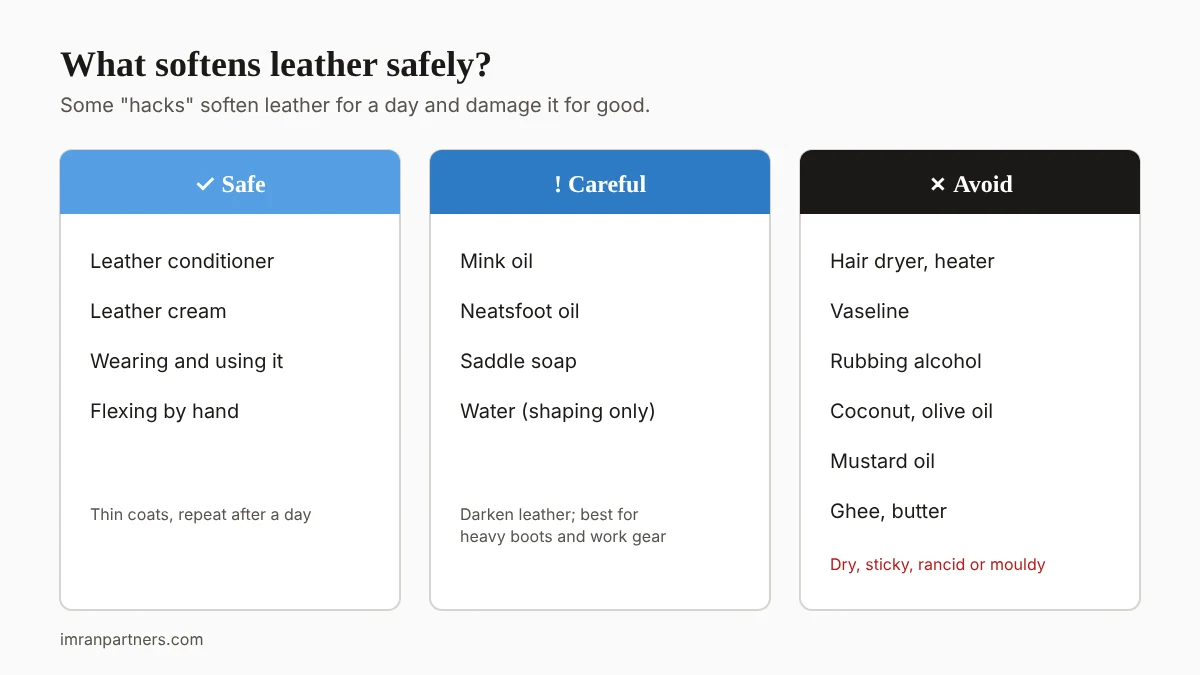
| Leather conditioner or cream | ✅ Best choice | Made to replace lost oils (often with lanolin or a little beeswax) without clogging the surface |
| Wearing and using it | ✅ Best for new leather | Warmth and flexing loosen the fibres naturally |
| Mink oil | ⚠️ Careful | Softens well, but darkens leather and is better for work boots than fine leather |
| Neatsfoot oil | ⚠️ Careful | Strong softener for thick leather and tack; darkens and can over-soften |
| Saddle soap | ⚠️ Cleaner, not a softener | Cleans and lightly softens; always condition after |
| Water | ⚠️ Only for shaping | Helps shape veg-tan leather, but it dries stiffer if you don't condition |
| Hair dryer or heat | ❌ Avoid | Dries out the oils, shrinks and cracks leather |
| Vaseline (petroleum jelly) | ❌ Avoid | Sits on top, feels sticky and attracts dust |
| Rubbing alcohol | ❌ Avoid | Strips oils and colour; leather ends up drier |
| Coconut or olive oil | ❌ Avoid | Uneven darkening, and food oils can turn rancid |
What people use at home, and what it really does
In Pakistan we often see people reach for kitchen remedies. Here is what we have seen happen:
- Mustard oil (sarson ka tel): the leather feels softer at first, but the heavy oil blocks the pores, darkens the colour and goes rancid over time, so the jacket or boots start to smell.
- Vaseline: gives a short-lived softness, but it does not soak in; it leaves a tacky surface that picks up dust and dirt.
- Ghee or butter: never use them. Animal fats set at room temperature and can lead to mold.
A good leather conditioner, or a little mink or neatsfoot oil for heavy leather, used sparingly, is the safe choice.
Does mink oil, saddle soap or dubbin soften leather?
- Mink oil: yes, it softens and adds water resistance. It darkens most leathers, so use it on work boots and heavy jackets, not on light-coloured or fine leather.
- Saddle soap: only a little. It is a cleaner with some oils in it; clean with it, then condition.
- Dubbin: it is a wax and oil mix for waterproofing boots. It softens a bit but mainly seals. Not for jackets or bags.
Softening leather by item
Shoes and boots
Condition the upper, focusing on the flex point across the toes and the heel counter, then wear them for short periods with thick socks. For stiff new boots, flex the toe area by hand every evening. Softening is not the same as making them bigger; if they pinch, stretch them with a shoe stretcher rather than adding more oil. Our article on how to clean nubuck covers suede and nubuck boots, which need a brush, not conditioner.
Leather jacket
Condition the collar, cuffs and elbows, then wear it. Lambskin and goatskin jackets soften within a few wears; thick cowhide biker jackets take weeks. If the jacket also needs cleaning, see how to clean a leather jacket first, then condition.
Bag or purse
Condition the body and the handles, then stuff the bag with a towel and flex the panels by hand. Daily carrying does the rest.
Belt
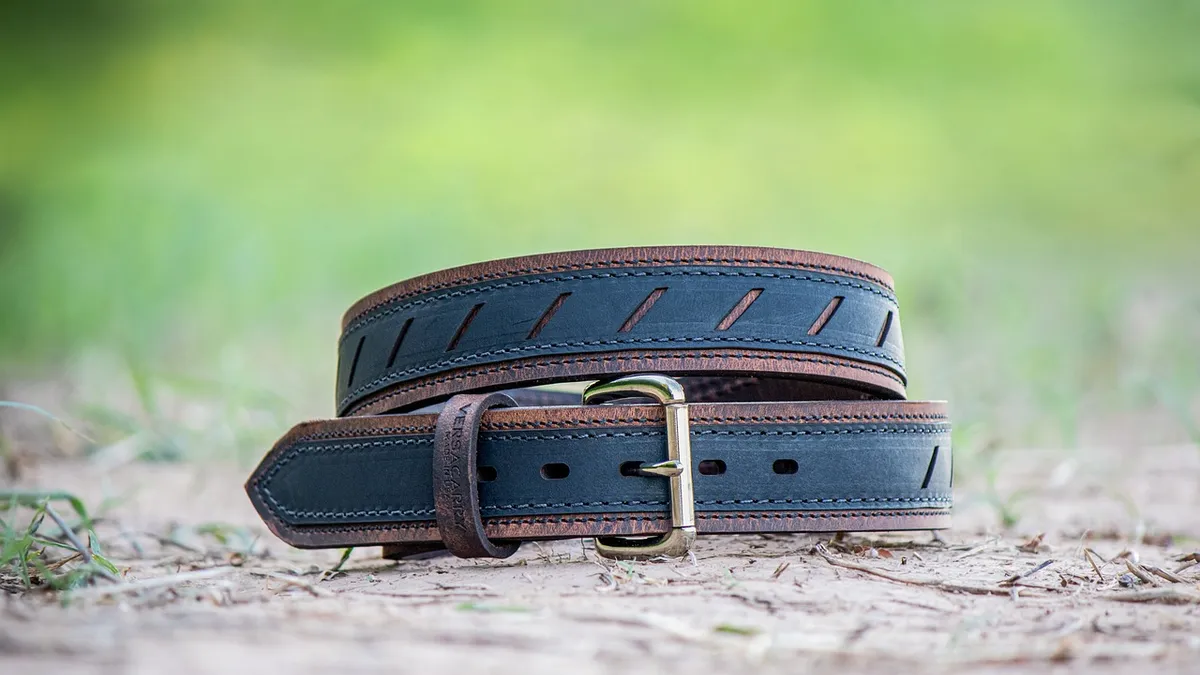
Condition it, then roll it tightly in both directions a few times and wear it. Chrome tanned belts soften fastest; belts made from thick veg-tan leather soften slowly and develop a patina as they do.
Gloves and watch straps
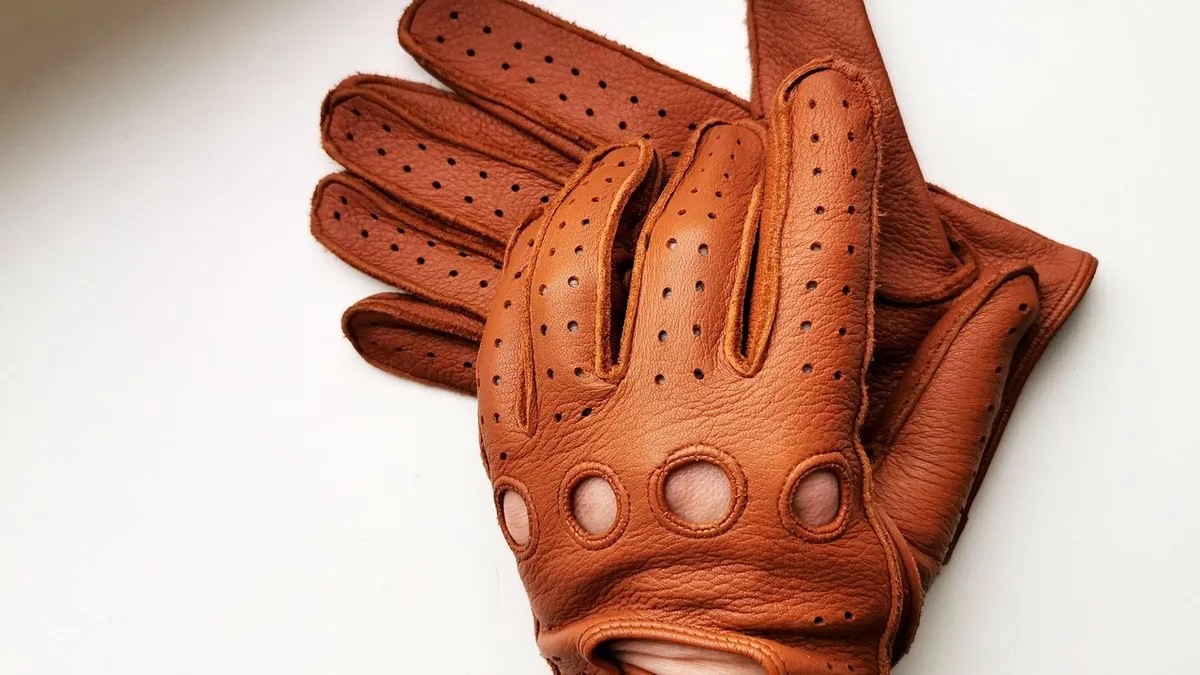
Use only a tiny amount of conditioner, wear them, and flex the fingers or strap often. Too much oil makes gloves slippery and stains a watch strap.
Boots still tight after softening? Our guide on how to stretch leather boots and shoes shows which parts can stretch and the safest method for each tight spot.
How to soften old, hard or stiff leather fast
There is no safe instant fix, but you can speed it up: clean the leather, apply a thin coat of conditioner, wrap the piece in a plastic bag overnight so the conditioner keeps working, then flex it well and repeat once or twice. Very old leather that is cracked through has lost its fibre strength; conditioning improves the feel but cannot repair the cracks.
Can you soften faux leather?
Faux (PU) leather is plastic, so conditioners and oils do nothing. Keep it at room temperature and wear it; a little warmth makes it more flexible. If it is cracking or peeling, the coating has broken down and cannot be softened back.
How to keep leather soft
- Condition 2 to 4 times a year, more often in hot, dry weather or with daily use.
- Keep leather out of direct sun and away from heaters, car dashboards and radiators.
- Dry wet leather slowly at room temperature, then condition it.
- Store it with some air around it; in humid months, check for mold.
Regular cleaning keeps leather soft too. For boots, follow our guide on how to clean leather boots.
For brands: how to order soft leather
If you want soft leather in your products, specify it before production, because you can't add it later. These are typical ranges in the orders we handle:
| Leather | Typical thickness | Used for | Hand-feel |
|---|---|---|---|
| Lambskin | 0.6 to 0.9 mm | High-end jackets, designer gloves, luxury bags | Softest, buttery, light, drapes well |
| Goatskin | 0.7 to 1.0 mm | Fine jackets, shoe uppers and linings, leather goods | Soft but strong, pebbled grain |
| Cowhide (garment) | 0.9 to 1.2 mm | Jackets | Firmer; needs extra fatliquor and long milling to be soft |
| Cowhide (heavy) | 1.2 to 1.8 mm and up | Biker jackets, handbags, boots, upholstery | Firm; softens with use |
Ask for a "milled" or "soft hand-feel" finish, approve a hand-feel sample before bulk, and keep it as your reference for every shipment. Our guide to goatskin leather compares it with cowhide and lambskin, and we help brands choose the right leather through the leather jacket manufacturers in Pakistan we work with.
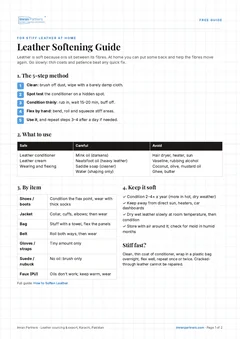
A printable guide to softening leather at home, plus a hand-feel spec sheet brands can send to their manufacturer.
⬇ Download free PDFFrequently asked questions
What is the best way to soften leather?
Clean it, apply a thin coat of leather conditioner, flex it by hand and use it. Repeat after a day if needed.
Can I use coconut oil to soften leather?
It is not a good idea. Coconut oil softens for a while but darkens leather unevenly and can go rancid.
Does Vaseline soften leather?
Only briefly. Petroleum jelly stays on the surface, feels sticky and attracts dirt. Use a leather conditioner instead.
Is it safe to use a hair dryer to soften leather?
No. Heat dries out the oils that keep leather soft and can shrink or crack it.
How long does it take to soften new leather?
Thin lambskin or goatskin softens in a few wears; thick cowhide boots, belts and jackets can take several weeks of regular use.
Does conditioner darken leather?
Slightly, at first. Most leather lightens again within a day or two; oils like mink and neatsfoot darken it more permanently.
Softening leather: the bottom line
Knowing how to soften leather is mostly about patience: clean it, condition it thinly, flex it and use it. Skip heat, Vaseline and kitchen oils, which make leather worse over time. And if you are developing your own products, remember that softness is built in at the tannery: request a quote and tell us the hand-feel you want.

Muhammad Imran is the founder of Imran Partners, a leather sourcing partner based in Karachi, Pakistan. He works with leather goods manufacturers across Pakistan to help brands source jackets, bags, wallets, belts and gloves, from leather selection and sampling to quality checks before shipment.
Muhammad Imran on LinkedIn